

To select the appropriate power generation system, you need to be familiar with the basic mechanical and operational differences between fuels.
The main differences between a diesel vs gas generator are how they generate power, the fuel they use, and the characteristics of the power they deliver.
Both systems are suitable for prime, continuous and standby power applications in industrial and commercial facilities.
You can browse the complete generator range as you make your decision.
How Diesel Generators Work
The compression-ignition cycle of diesel power systems is optimized for high demand and quick emergency response:
Compression Ignition: The engine draws in air and compresses it at very high pressure, generating a lot of heat.
No spark plugs are required since the diesel fuel is injected directly into the combustion chamber and is ignited by the compressed air.
- On-Site Fuel Storage: Fuel is stored on-site in a dedicated sub-base or external bulk tanks, giving your facility independence from municipal public utilities.
If acoustics is also a factor, you can compare silent diesel generators.
- Rapid Block-Load Acceptance: High engine torque and energy density enable diesel units to accept large step loads and start rapidly, making them suitable for mission-critical facilities.
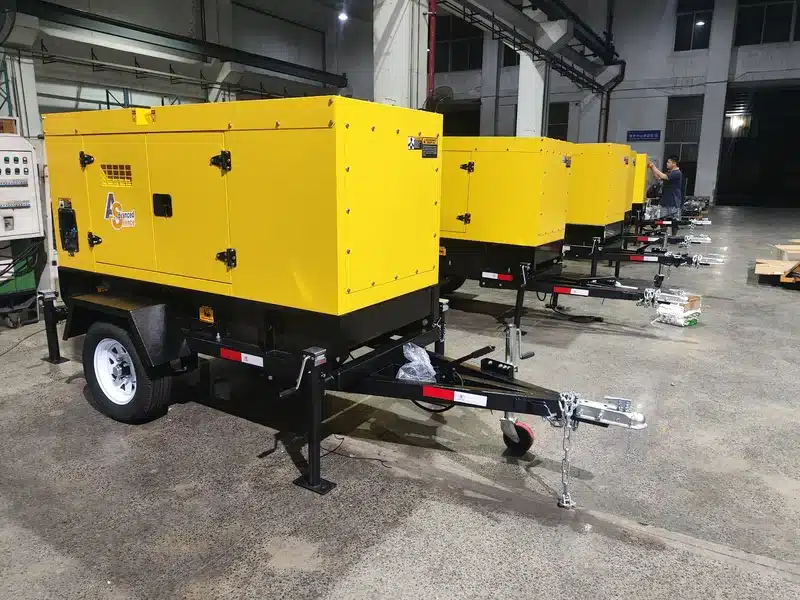
How Gas Generators Work (Natural Gas and Gasoline)
Gas-fueled generator systems are spark-ignition and are usually linked to a city utility pipeline or a local fuel system.
If you are comparing with petrol, you can also have a look at the petrol generator range.
Spark Ignition: Carburetors or electronic mixers supply the engine cylinders with a precisely controlled air/fuel ratio.
Then, the mixture is fired by timed electrical sparks from spark plugs.
- Continuous Pipeline Delivery: With a natural gas configuration, you connect directly to municipal utility lines.
This will ensure a continuous fuel supply during normal operation, without the need for on-site fuel replenishment or fuel polishing.
- Clean Combustion Dynamics: Gaseous fuel combustion results in reduced particulates and exhaust emissions.
This can make local environmental permitting easier and allow you to run on light electrical loads without the risk of wet-stacking that is associated with diesel engines.
Key Differences Between Diesel and Gas Generators
Fuel consumption, load management, durability, and environmental impact are the factors that determine the choice of diesel vs gas generator.
These technical differences are significant in order to deploy a power unit that is suitable for your operating conditions.
| Performance Factor | Diesel Generator | Natural Gas Generator |
|---|---|---|
| Energy Density | High, allowing a compact engine footprint | Moderate, so a larger footprint may be required |
| Block-Load Acceptance | Rapid transient response | Slower step-load recovery |
| Fuel Supply Mode | Dedicated on-site fuel storage | Utility pipeline connection |
| Engine Wear Risk | Wet stacking under low loads | Spark-ignition component wear |
| Permitting & Exhaust | May require aftertreatment such as SCR or DPF | Lower emissions can simplify permitting |
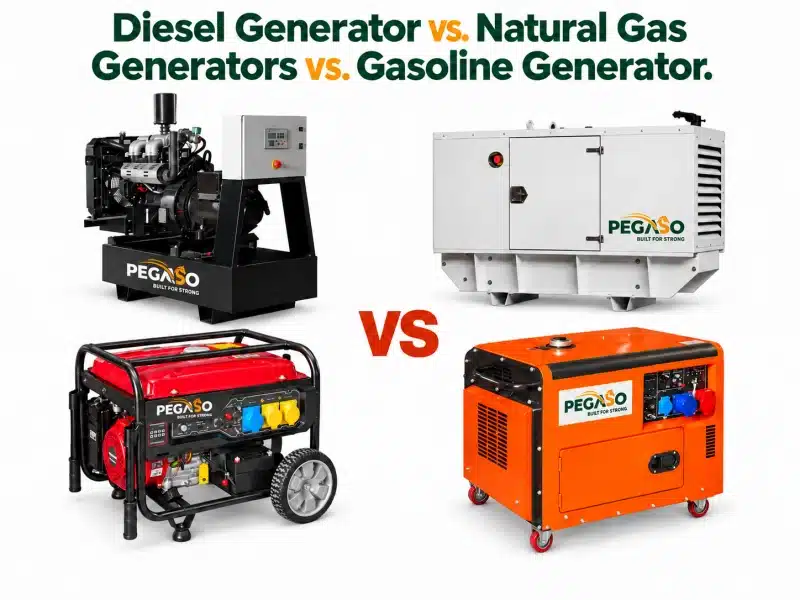
Fuel Efficiency and Consumption Rates
Your overall prime and standby power operating costs are directly affected by fuel efficiency:
Energy Density: Diesel fuel is more energy dense than natural gas.
A diesel generator vs gas generator can produce more kilowatt-hours per unit of stored fuel when it is heavily and continuously used.
Fuel Supply Reliability: Diesel needs on-site storage tanks, so your facility can continue to function during a widespread power outage.
- Continuous Delivery: A natural gas generator can be connected to an uninterrupted utility pipeline.
While you may not have to worry about refueling-truck logistics during long runtimes, your system is still vulnerable if the municipal pipeline fails.
Power Output and Load Capacity
One of the most significant differences between these types of engines is transient load response:
- Block Loading: Rapid transient loads are no problem for diesel engines.
When multiple large electrical loads are applied simultaneously, diesel is often used as a benchmark for immediate torque and frequency recovery for mission critical facilities.
- Load Step Management: Sudden motor-starting loads may make the difference between choosing a gas or diesel generator.
Natural gas engines generally have a slower transient response and need to be sized correctly or the engine controls need to be sophisticated to prevent voltage drop when dealing with large step loads.
- Footprint Efficiency: Diesel offers a higher power density, so you can achieve the same kW or MW output in a smaller physical footprint than many natural gas units.
Lifespan, Durability, and Engine Reliability
When matched to the proper duty cycle and maintained properly, both systems can offer a long service life:
Heavy duty compression ignition diesel engines are built for long service life.
However, if you are running a diesel under light electrical loads (less than 30% load) you can cause wet stacking (unburned fuel in the exhaust system).
Natural gas engines are spark-ignition engines.
They do not have the same problem with wet-stacking or carbon buildup, but they do need regular servicing of spark plugs, ignition coils, and gas mixer trains.
Fuel Degradation: If you are storing diesel on site, you should be undertaking fuel polishing, fuel stabilization and tank testing regularly to prevent contamination.
You don't store natural gas in a tank on your property, so it doesn't deteriorate while in storage.
Noise Levels and Operational Comfort
How you integrate a generator into your site is dependent on exhaust output, vibration and mechanical noise:
Acoustic Signature: Natural gas generators tend to be quieter and have a smoother combustion process, which is ideal for commercial applications where noise levels are a factor.
Exhaust Emissions: Natural gas produces fewer combustion-related greenhouse gas emissions and less particulate matter, which may help alleviate local air-quality permitting.
Diesel Sound & Emissions Control: Diesel generator sets have a higher combustion pressure.
Selective catalytic reduction (SCR) or diesel particulate filters (DPF) and sound-attenuated enclosures may be necessary to meet the stringent Tier 4 emission standards.
Cost Comparison
When evaluating a diesel vs gas generator, there are two types of costs to consider: Capital expenditure (CapEx) and Operating expenditure (OpEx).
If you look at the total cost of ownership, you will see that you will have a better idea of the purchase price and the maintenance and fuel costs.
| Expense Factor | Diesel Generator | Natural Gas Generator |
|---|---|---|
| Initial Purchase Price | Lower equipment cost per kW | Higher upfront equipment cost |
| Installation & Hookup | Fuel-tank installation and site preparation | Gas-pipeline connection and utility tie-in fees |
| Fuel & Operation Costs | Fluctuating fuel prices plus stabilization costs | Steadier and often lower utility fuel rates |
| Key Routine Replacement Parts | Fuel filters, oil filters, DEF, and air filters | Spark plugs, ignition coils, and air/fuel mixers |
Upfront Equipment Costs
A diesel generator vs gas generator comparison may simply be a question of equipment costs when it comes to equipment investment:
Lower Cost Per kW: With the scale of manufacture and high energy density, diesel units can provide a lower initial purchase price per kW.
- Storage vs. Utility Connections: Diesel will require fuel-storage tanks on site, which will increase your site preparation.
A natural gas generator vs diesel generator installation does not need storage tanks, but can involve a lot of utility connection costs, piping, and pressure-regulation equipment.
- Emissions Hardware: Depending on your local environmental regulations, a diesel system may need an exhaust aftertreatment system such as SCR or DPF.
This requirement adds to the installed CapEx.
Maintenance Spare Parts Costs
The service intervals and spare-parts requirements depend on the combustion design and fuel chemistry:
- Diesel Engine Wear and Upkeep: Compression-ignition engines have fewer electrical wear parts, as they do not contain spark-ignition parts.
You will have to allow for the use of heavy duty oil filters, fuel/water separators and fuel polishing from time to time, however.
If light loads are being used, periodic load-bank testing may also be necessary to prevent wet stacking.
- Gas Engine Servicing: Spark-ignited natural gas systems do not wet stack and have fewer soot deposits.
Spark plugs, ignition coils, valve adjustment parts and gas-train parts are all part of your routine spares.
Usually, consumable costs are known, but there is a requirement for planned ignition-component replacement over long run hours.
Ideal Application Scenarios
Whether you opt for a diesel vs gas generator will depend on the site infrastructure, compliance requirements, and the desired runtime.
If you evaluate these conditions in combination, you can match the generator set to your actual operating requirements.

Best Uses for Diesel Generators (Industrial and Emergency Backup)
When it comes to diesel generator vs gas generator for critical infrastructure, diesel is often the preferred option for emergency backup and high-demand industrial power.
Quick start-up and high transient block-load acceptance for immediate power transfers may be desired for mission-critical facilities such as data centers, hospitals and emergency services.
Utility-Independent Sites: When municipal utility pipelines fail, dedicated on-site fuel tanks can provide energy for operations that must be energy independent.
Footprint-Constrained Industrial Plants: For maximum power output in a small engine footprint, diesel's higher energy density may be an advantage for your plant.
Heavy Industrial Prime Power: Diesel power is suitable for heavy industrial equipment and construction applications where you need the torque and engine performance to meet demanding operating conditions.
Best Uses for Gas Generators (Residential, Portable, and Off-Grid)
A natural gas generator vs diesel generator might be right for you if your installation requires lower emissions, uninterrupted fuel supply, and easier site permitting.
If noise and power quality are important for portable applications, you can also compare inverter generators.
- Urban Facilities with Strict Air Quality Regulations: If your urban facility has strict environmental permitting requirements, you can take advantage of natural gas's cleaner burning characteristics and reduced particulate emissions.
Reliable Utility Grids: If your commercial building is on a direct pipeline, you can do away with on-site fuel deliveries, fuel testing and long-term fuel polishing.
Light or Extended Variable-Load Facilities: If your electrical load is not often at peak load, a natural gas system will remove the concern of diesel wet-stacking at low load.
Continuous Prime and Co-Generation Projects: If a commercial installation is to be planned for the long term, continuous pipeline fuel availability can eliminate the need for continuous fuel-replenishment scheduling.
Frequently Asked Questions About Diesel vs. Gas Generators
Which generator lasts longer, diesel or gas?
Generally, diesel generator sets are more durable.
They have heavy duty blocks and compression ignition systems for long work loads.
But a natural gas unit can also have longevity benefits as it burns cleaner, creates less carbon deposit and doesn't wet stack at low load.
You can keep either setup reliable by managing diesel fuel stability or servicing gas-engine ignition parts on schedule.
Is a diesel generator cheaper to run than a natural gas generator?
When comparing the operating cost of a natural gas generator to a diesel generator, there are a few compromises to consider:
Fuel and Supply Costs: With a direct connection to the utility line, natural gas can offer more stable and lower fuel costs, and eliminate fuel delivery logistics.
Fuel Management: Diesel must be stored on site in tanks and fuel polishing and fuel stabilization must be performed to prevent degradation during extended periods of stand-by.
Initial Equipment Cost (CapEx): Diesel may have a lower CapEx per kW than natural gas, but natural gas may have a lower OpEx per kW.
Are gas generators better for residential home backup?
Natural gas is often a suitable standby and light commercial backup power source if a reliable utility connection is available.
You do not store liquid fuel on-site, have reduced exhaust emissions and do not have to deal with the wet-stacking risk of running a diesel engine under normal light load conditions.
For those who don't have pipeline access or need quick block-load acceptance and full off-grid fuel independence, a diesel system is still the better choice.
Who is the major Manufacturer of diesel generator?
Major diesel generator manufacturers include Caterpillar, Cummins, Kohler, and Generac, which are known for both their engine production and complete generator sets.
Other prominent manufacturers include MTU Onsite Energy, DEUTZ, Doosan, and Perkins Engines.
Can you recommend reliable brands for 22kW diesel generators?
The Generac 22kW, Kohler KM22, and Pramac GSW22P (Perkins engine) rank as the most reliable choices for 22kW (or 22kVA) diesel backup power.
Top Reliable Brands
- Generac: Generac offers popular, highly integrated home and light commercial standby units with strong automated controls and widespread local dealer support.
- Kohler: Kohler builds exceptionally rugged, commercial-grade liquid-cooled diesel systems known for long service life and clean power output.
- Pramac: Pramac pairs robust enclosures with premium industrial engines like Perkins or Yanmar to deliver tough, fuel-efficient performance.
- Cummins: Cummins utilizes heavy-duty commercial industrial DNA in their liquid-cooled generator lines, ensuring supreme endurance during extended grid outages.
- Atlas Copco: Atlas Copco specializes in portable and trailer-mounted heavy-duty diesel generators engineered for harsh job sites and continuous operation.
Industrial diesel generators for sale
Industrial diesel generators are available from major suppliers like us, we offering new units ranging from 10 kW to over 2,000 kW. Prices typically span from $7,800 for smaller commercial units to over $135,000 for heavy-duty 500 kW+ systems.
