

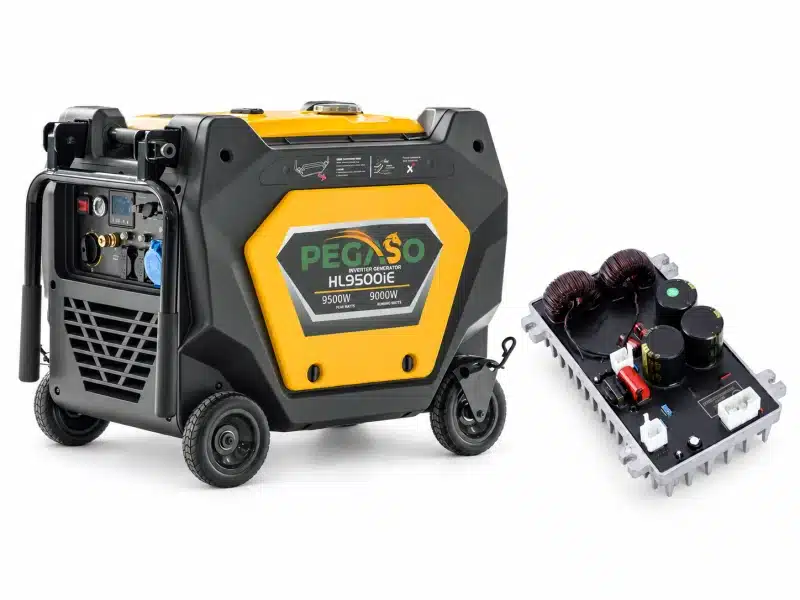
Have you ever wondered how a generator can power sensitive electronics while adjusting to changing electricity demands? The answer lies in an ingenious technology: the inverter generator. In simple terms, an inverter generator is a “flexible” power source. It can automatically adjust the engine speed and power output according to real-time demand, unlike traditional generators that always operate at a fixed power. Compared with traditional models, inverter generators usually operate more quietly and energy-efficient, and can provide more stable power output. For this reason, it is widely popular in household backup power supplies, outdoor activities, and various commercial applications. So, what is an inverter generator? How does it work, and what are the best use cases for it? This article will answer these questions for you, one by one.
What Is an Inverter Generator?
An inverter generator is a portable generator that produces alternating current (AC), converts it to direct current (DC), and then inverts it back into stable, clean AC power that is safe for sensitive electronics. It is suitable for powering electronic equipment that has specific requirements regarding power quality.
An inverter generator consists of the following main components:
- Engine: Uses gasoline, propane, or diesel fuel to convert chemical energy into mechanical energy.
- Alternator: Converts the mechanical energy provided by the engine into electrical energy.
- Rectifier: Converts alternating current (AC) into direct current (DC).
- Inverter: Converts direct current (DC) into the required alternating current (AC) output.
- Control System: Regulates the electrical output based on the unit’s design, monitors operational status, and provides necessary protective functions.
How Does An Inverter Generator Work
The operation of an inverter generator primarily consists of three steps.
Step 1: Mechanical Energy to AC Electricity
The operation of an inverter generator begins with the engine. The engine generates mechanical energy by burning fuels, driving the rotor inside the generator to rotate. When the rotor rotates at high speed in the stator winding, alternating current (AC)1 is generated by the principle of electromagnetic induction. This process is basically the same as the power generation principle of traditional generators and is the first step of the entire power supply process.
Step 2: AC to DC Conversion
When the generator generates alternating current, this electrical energy is not immediately sent to the socket but first enters the rectifier system. The main function of a rectifier is to convert alternating current into direct current (DC)2, thereby eliminating the influence of frequency variations on the final output.
In simple terms, the direction of alternating current keeps changing, while direct current always flows in the same direction. Through the rectification process, the originally fluctuating alternating current is converted into stable direct current energy, providing a unified energy foundation for the subsequent inverter stage.
Step 3: DC to Regulated AC
After rectification is completed, the direct current will enter the inverter. This is the most crucial part of the inverter generator and also the origin of its name. The inverter converts direct current back into alternating current through electronic circuits and precisely controls the output voltage and frequency.
Inverter generator can generate stable current waveforms by inverter electronic components. Regardless of how the engine speed changes, the inverter can continuously output standard 120V/60Hz (220V/50Hz)AC power (or other local standard voltages and frequencies).
Electricity processed by inversion usually has lower total harmonic distortion (THD) and more stable voltage performance, and thus is called Clean Power.
This process enables the equipment to regulate its electrical power output via an electronic control system, reducing fluctuations in voltage and frequency. For electronic devices such as laptops, televisions, and routers, a stable power output is of practical value.
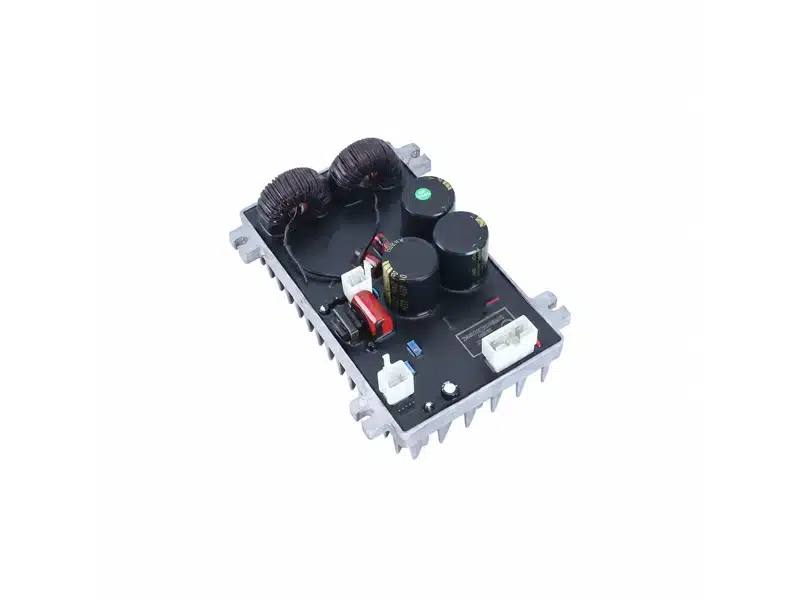
Suppliers of inverter generators offer not only complete units but also OEM/ODM manufacturing and product customization services tailored to specific client requirements. Because the inverter is so important, you need pay extra attention to this component when choosing an inverter generator.In China, there are well-known suppliers of inverter components in the generator industry. They provide components to generator manufacturers; Among them, the most well-known is Chongqing Yuxin Pingrui Electronic Co., Ltd3. (stock code: 301107).
Inverter Generator Benefits
Provide Stable and Clean Power Output
One of the greatest advantages of an inverter generator lies in its ability to generate stable alternating current. Compared with traditional generators, it has smaller voltage and frequency fluctuations, and the quality of the output power is closer to the power supply level of the public power grid.
Higher Fuel Efficiency
Inverter generators can automatically adjust the engine speed according to the actual power demand. When the load is light, the engine speed reduces accordingly, thereby decreasing fuel consumption. This function not only cuts operating costs but also extends the endurance of a single fuel tank. It is a significant advantage for applications that require long-term operation.
Quieter Operation
Noise control is a key concern for many people. Because inverter generators do not need to run at high speeds continuously when under light loads. Their operating noise is lower than that of conventional generators.
Easy to Carry
Many inverter generators adopt a compact design, making them lighter than traditional models and easier to move and store. For users who need to frequently move power generation equipment (such as outdoor workers or event organizers), this portability brings great convenience.
Inverter Generator Vs Conventional Generator: Quick Comparison
| Feature | Inverter generator | Conventional generator |
|---|---|---|
| Power output | Electronically converted and regulated AC output | Typically produces AC directly through an alternator |
| Fuel efficiency | Often better under partial loads | Often runs at a relatively constant speed |
| Noise level | Generally quieter, depending on load and design | Often louder, depending on engine and enclosure |
| Portability | Many models are compact and lightweight | Models vary widely, especially higher-output units |
| Power capacity | Commonly suited to portable and smaller-scale needs | Often available in higher-output configurations |
| Sensitive electronics | Often offers low total harmonic distortion (THD) | Suitability depends on the model’s power quality |
Inverter Generator vs. Battery Power Station: What Is the Difference?
When choosing backup or portable power sources, inverter generators and portable energy storage power sources are the two most common solutions. Both can provide power during power outages or in off-grid environments, and the main difference lies in the different sources of energy.
An inverter generator drives an engine by burning gasoline, propane or other fuels, thereby generating electricity. Portable energy storage power supplies rely on built-in lithium batteries to store electrical energy. When the stored electricity is exhausted, it must be charged through the mains power, solar panels or other power sources. Therefore, the working hours of such devices are limited by their battery capacity.
Inverter Generator vs. Digital Generator vs. Portable Generator
When understanding inverter generators, you may see inverter generators, digital generators and portable generators at the same time. They are not entirely at the same classification level and need to be understood separately.
Digital Generator
A digital generator is not a specific category of generators with a unified technical definition. In product descriptions, the term “digital” may refer to functions such as digital control, electrical monitoring, digital display or electronic regulation. For instance, some generators are equipped with digital displays to show their operating status, power output or other information. Some other generators may adopt electronic control systems to manage the engine and power output.
However, digital display, digital control and inverter circuits belong to different concepts. The inclusion of the word “digital” in the product name does not necessarily mean that the device adopts an inverter architecture, nor does it indicate that it can provide a specific level of power quality.
Portable Generator
A portable generator emphasizes the device’s ability to be moved or transported with relative ease, rather than any specific method of power conversion.
Don’t be misled by technical-sounding figures or similar terminology. Many sellers use borderline, deceptive tactics to justify higher price tags. Stay alert to these traps and learn to identify genuine inverter generators.
How to Choose the Right Inverter Generator Size
Small Inverter Generator
- Output power: Ranging from 1,000 to 2,000 watts
- Weigh: Approximately 15 to 25 kilograms
These units are compact, making them easy for a single person to carry. They are well-suited for camping, outdoor activities, mobile office setups, and powering small household devices.
Mid-sized Inverter Generator
- Output power: Ranging from 2,000 and 4,500 watts
- Weigh: Approximately 25 to 50 kilograms
It is capable of powering multiple devices, such as refrigerators, air conditioners, televisions, lighting, and certain power tools.
Large Inverter Generators
- Output power: Over 4,500 watts, with some models exceeding 10,000 watts.
- Weigh: About 60 to over 150 kilograms.
Such equipment is commonly used for large recreational vehicles (RVs), commercial events, construction projects, and as backup power for critical equipment. They are ideal for supporting the simultaneous operation of multiple high-power loads.
If you want to review a more professional size selection guide, here is an article with exact steps to correctly size an industrial generator.

Are Inverter Generators Safe?
As long as it is used and maintained properly, an inverter generator is usually a safe and reliable power supply device. However, the safety of a generator does not only depend on the product itself, but to a large extent on how it is used. Since inverter generators generate electricity by burning fuel, this process produces waste gases such as carbon monoxide. Therefore, they must never be used indoors, in garages, basements or any other enclosed spaces. The generator should be placed in a well-ventilated outdoor area and kept away from doors, windows and air inlets to prevent exhaust gases from entering the building.
FAQs about Inverter Generator
Can an inverter generator power a refrigerator?
Yes. An inverter generator can power a refrigerator if its rated output can handle the refrigerator’s running watts and startup surge. Check the appliance’s power requirements and leave enough capacity for other connected devices.
Do inverter generators use less fuel?
Generally, yes. Inverter generators adjust engine speed to match the electrical load, reducing fuel consumption when demand is low. Actual fuel efficiency depends on the model, load, and operating conditions.
Can you run an inverter generator continuously?
Yes, as long as the generator is designed for the intended runtime and has enough fuel and proper maintenance. Follow the manufacturer’s operating limits, check oil levels as instructed, and allow for scheduled maintenance and refueling.
Sources
Wikipedia. Alternating current. Source linked in the original article for alternating current (AC). ↩
Wikipedia. Direct current. Source linked in the original article for direct current (DC). ↩
Chongqing Yuxin Pingrui Electronic Co., Ltd. Company website linked in the original article. ↩
