

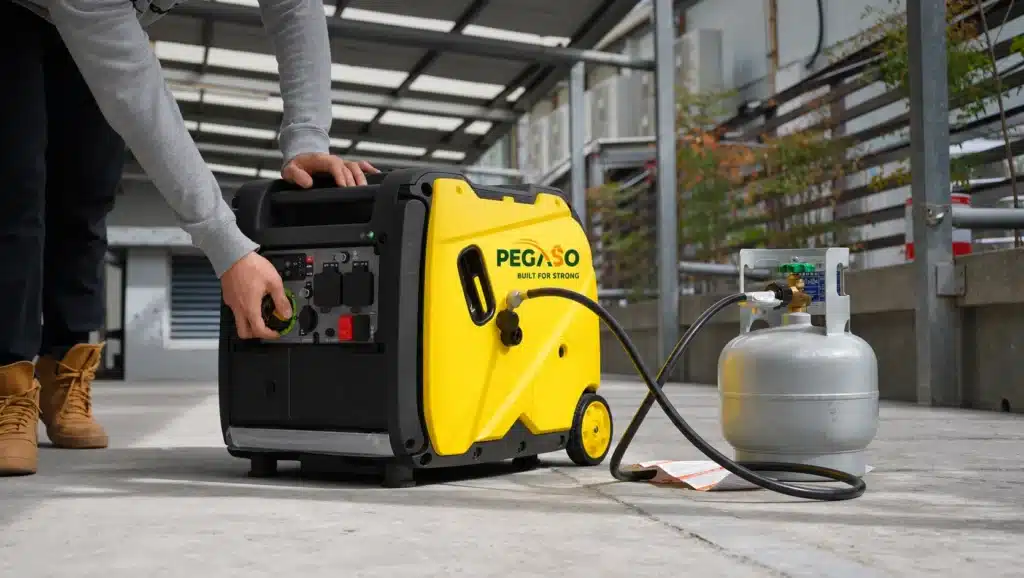
Can an inverter generator power a house? The answer is yes, but it depends on what you expect it to power during an outage. In this article, I outline the basic daily needs you’ll want to maintain during a power outage, as well as the features of inverter generators you should consider to meet those needs. Also, understanding the difference between essential loads and whole-home loads is the key to determining whether an inverter generator is sufficient for your home.
Can an Inverter Generator Power a House?
Absolutely, but many families also consider what lifestyle they can maintain.
During power outages many families do not need to have electricity restored to all their appliances. They will normally prioritise the most important aspects of electricity, such as fridge, internet, lights, TV and charging cell phones. An inverter generator can usually be used to solve this problem. More and more families are now using inverter generators to solve temporary power outages.
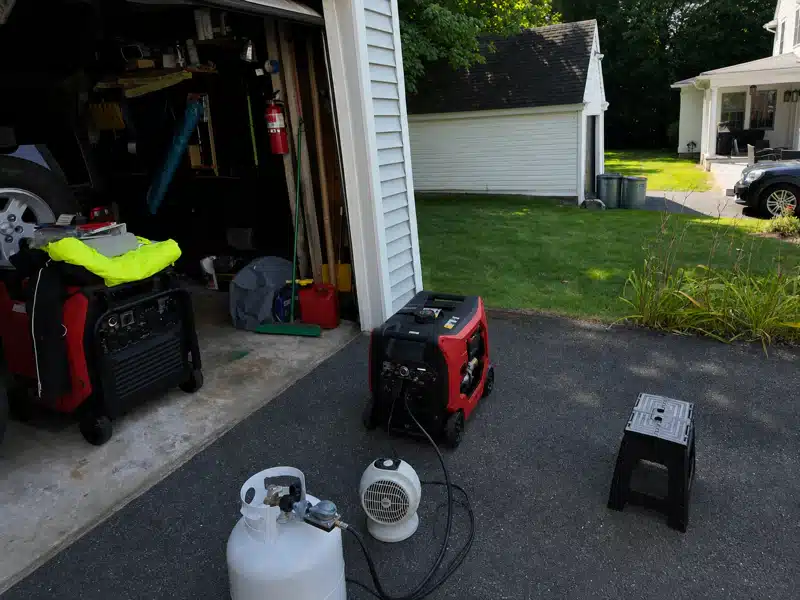
What Can an Inverter Generator Power During a Home Outage?
Keep Food Fresh and Essential Lighting Running
Recommended Capacity: 2,000–3,000 W Key Considerations: Continuous operation, fuel efficiency, and low noise
In most cases, people will prioritise lighting, communication and food preservation appliances. Here are some examples of appliances you may have in your home:
- LED lights: 5–20 W per light
- Wi-Fi router: 10–30 W
- Cell phone charger: 5–20 W
- Laptop: 50–100 W
- TV: 80–300 W
- Refrigerator: 100-500W
The number one thing most families will prioritise is food preservation. From data on popular appliances in the U.S. market, the average power consumption of a fridge whilst in operation will be between 150-400W. Freezers will have a power consumption of between 100-500W whilst in operation.
Whilst the power consumption of these appliances is not too high, they can produce a high surge current when starting up (2-3 times the normal power consumption). This means you need to consider some starting power when using them, even just to ensure your fridge is working correctly. The great news is that the vast majority of inverter generators 3,000W and above will easily meet the demands of a fridge and freezer.1
Stay Connected and Productive
Recommended Capacity: 3,000-4,500W Key Considerations: Stable power supply, low THD, USB port, 30A output port, and remote monitoring capabilities.
Internet access is now as essential to the modern home as light. With many needing to work from home, have video calls, access cloud storage or simply remain in contact with the outside world, having power to your internet devices and electronics can cause immediate issues during a power cut.
Inverter generators are ideal here. The inverter generator uses electronic technology to offer a much better power wave pattern. This means they are great for powering your router, modem, laptop, monitor, desktop computer and smart home control system. Many generator models offer very low THD levels (less than 3%), this provides almost the same quality as utility power making them ideal for powering sensitive electronics.2
Continue Basic Cooking and Daily Activities
Recommended Capacity: 4,500-7,000W Key Considerations: Surge Capacity and large tank
A power outage doesn’t necessarily mean you have to stop doing anything at home.
Many inverter generators will be able to provide the short-term power you need to use many of your everyday kitchen appliances (coffee maker, microwave, rice cooker etc.), allowing your family to make basic meals.
However, it is worth noting that kitchen appliances are usually some of the most powerful items in your home. Electric kettles, microwaves and air fryers can be over 1000 watts. As such, it is usually better to stagger their use with an inverter generator.
Maintain Comfort During Extreme Weather
Recommended Capacity: 6,000-8,000W+ Key Considerations: High surge capacity, electric start, and parallel capability
Cooling is the main concern in hot areas. Cold areas will be more concerned with ensuring heating appliances keep running. Many medium and large sized inverter generators can provide enough power to run portable air conditioners, window mounted air conditioners, fans and some space heaters.
However, the central air conditioning unit will often be too much. Central air conditioning units in residential areas will require a lot of power to run and can cause a large starting surge which is much higher than the running power. This can make many portable invert generators struggle to run them for long periods.
Essential Loads vs. Whole-House Power
Whole house loads however, are essentially about trying to simulate the closest to your regular conditions. This can include more basic appliances plus central AC, electric water heaters, electric ovens, electric dryers, washing machines and other large appliances.
With most home users it does not matter so much if you can run all of your appliances at once but rather which appliances are the most important to run. If you take some common reasons why you might lose power, such as hurricanes, blizzards or a power cut, you may find that you need your fridge to keep your food fresh, internet access and basic lighting are far more important than having your electric dryer or oven running.
In short, inverter generators are generally best used for essential loads.
Important Limitations When Using an Inverter Generator for Home Backup
Fuel Type and Runtime
In general, a gasoline inverter generator will work well enough for short term outages. However, for prolonged outages caused by hurricanes, blizzards or regional grid failures, you might find that gas stations are closed, fuel delivery services disrupted or long queues. If the generator still runs, it won’t be that useful as a backup generator if you don’t have a steady source of fuel.
When choosing an inverter generator for your home, you’ll want to consider the availability of fuel in your area. Models which support propane or dual fuel tend to provide better emergency preparedness for areas prone to extreme weather.
Generator Output and Voltage Compatibility
Not all household appliances will be compatible with inverters. Many portable models produce only 120 V. However, some electrical appliances such as deep well pumps and central air conditioning systems will need 240 V. You also need to ensure the correct socket is used, transfer switch compatibility and that your home has the correct electrical set up. If not you may find you cannot run as many appliances as you expect.3
Backup Duration and Operating Conditions
Most run times quoted are based on ideal testing conditions. In reality, if the weather is hot, very cold or there has been long periods of rain the run time can be affected. If your home is often suffering from long power cuts then focus on the battery life, maintenance intervals and the longevity of the product.
Portable Inverter Generator vs. Standby Generator: Which Is Better for Home Backup?
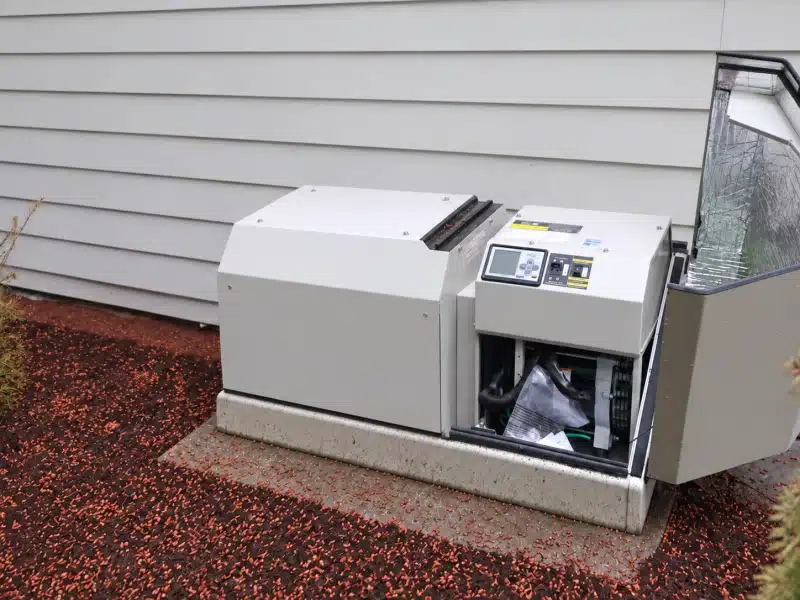
A portable inverter generator is usually a more practical option for domestic users. This is because it is a more affordable solution to most situations where you would have a power cut for a short period of time (a few hours to 1-2 days). However, a standby generator will be more suitable if you require full power to your home with little disruption to your everyday life.
The following is a more intuitive comparison:
- A 5,500W portable inverter generator can support a refrigerator, lighting, network equipment, TV, computer and some kitchen appliances simultaneously.
- A 22kW standby inverter generator can support the simultaneous operation of central air conditioning, water pumps, refrigerators, lighting and other important household appliances in most residences, and can automatically start up after a power outage without manual intervention.4
Conclusion
Keeping your food fresh, having internet and powering devices to communicate, and running a few vital appliances is often the top priority for homeowners. An appropriately sized inverter generator will give you reliable power with the added benefit of being quieter, more fuel efficient and clean electricity to protect your sensitive electronics.
To ultimately see if an inverter generator could be used to power your home, consider what lifestyle you want to maintain. With this knowledge you can identify what you need to be running, what you want to back up and how much you can realistically expect from an inverter generator. This will ensure that you have a generator which will deliver great performance, reliability and value for money.
Source pending — The recommended capacity ranges, appliance wattages, and starting-surge estimates are stated in the supplied article; no supporting appliance data or generator load worksheet is included. ↩
Source pending — The THD specification requires the datasheet or test report for the exact inverter generator model; none is identified in the supplied article. ↩
Source pending — Output voltage, receptacles, and home-connection compatibility require the exact generator manual and installation documentation; no specific manual is cited. ↩
Source pending — The 5,500 W portable and 22 kW standby examples are not accompanied by identified generator models, datasheets, or load calculations. ↩
