

The selection of the backup power shouldn't be a gamble.
It can mean the difference between having emergency power for your home, a heavy duty unit for your industrial operation, or a portable power source for your outdoor job site.
This is a complete guide to the different types of generators, how they work and how to compare the complete generator range to suit your needs.
Let's get started.
The Knowledge of Electrical Generators and their Working Principles
Electrical generators are the backbone of modern power resilience, converting mechanical energy into reliable electrical energy. From powering a home during an emergency to operating heavy machinery in an industrial setting, it's important to understand how these machines work so you can select the right equipment.
What is a Generator and How Does it Generate Power?
A generator uses mechanical energy to compel the flow of electric charges that are already in the wire of its windings through an external electric circuit. It is based on Faraday's Law of Electromagnetic Induction: When a conductor is moved relative to a magnetic field, an electromotive force (voltage) is induced across the conductor.
Energy Conversion: Mechanical torque from an internal combustion engine or other source of energy is used to turn a rotor.
The moving rotor produces a varying magnetic field around the fixed copper coils (stator).
This magnetic flux creates a constant current of electrons, producing clean and useful electrical current that is appropriate for your wattage needs.
AC (Alternating Current) Generators and DC (Direct Current) Generators
There are two basic types of generators: Alternating Current (AC) and Direct Current (DC).
| Feature | AC Generators (Alternators) | DC Generators (Dynamos) |
|---|---|---|
| Current Flow | Periodically reverses direction | Flows continuously in a single direction |
| Internal Mechanism | Uses slip rings/carbon brush to maintain connection | Uses a split-ring commutator to rectify current |
| Maintenance | Low maintenance; highly durable brushes | Higher maintenance due to commutator wear |
| Transmission Efficiency | Highly efficient over long distances | Less efficient over long distances; voltage drops |
| Primary Applications | Whole house generators, industrial operations, grid power | Battery storage charging, marine systems, specialized tools |
AC Generators: The benchmark for residential, commercial and industrial power. They effortlessly supply standard appliances and heavy duty grid-tied equipment.
DC Generators: Usually used in special off-grid applications, electric vehicle charging stations, and direct battery backup.
Important Parts of a Power Generator
A heavy duty generator is a combination of mechanical and electrical components that are designed to provide a stable output under continuous load.
The main mechanical power source is the engine. It is sized to the maximum wattage capacity and powered by diesel, gasoline or natural gas.
Mechanical rotation to electrical power: Alternator (Genhead) consists of the stator (stationary slotted core with copper coils) and the rotor (rotating magnetic component).
Automatic Voltage Regulator (AVR): This regulates the output voltage to prevent surges and spikes, protecting sensitive electronic devices.
Fuel System: Fuel tank, fuel lines, fuel injectors, and fuel filters for continuous operation for long runtimes.
Cooling and Exhaust Systems: Heavy duty radiators, cooling fans and industrial mufflers to control thermal dissipation and direct emissions safely away.
Lubrication System: Circulates engine oil across moving components to reduce friction and wear and help extend service life.
Control Panel: The main user interface with digital gauges, circuit breakers, runtime meters and automatic start/stop control modules.
Main Types of Generators by Functionality
It all depends on how and where you intend to use the generator. If you're comparing generators based on functionality, consider the type of installation, mobility, power delivery, and duty cycle.
| Generator Type | Typical Wattage Capacity | Mobility | Primary Use Case |
|---|---|---|---|
| Home Generators | 1 kW–22 kW | Stationary&Mobile | Whole-house emergency backup |
| Portable Generators | 1 kW–10 kW | Mobile (wheels/carry handles) | Job sites, camping, temporary power |
| Standby Generators | 15 kW–150+ kW | Permanent installation | Automatic uninterrupted power |
| Industrial / Commercial | 50 kW–3,000+ kW | Stationary/skid/trailer | Factories, hospitals, construction |
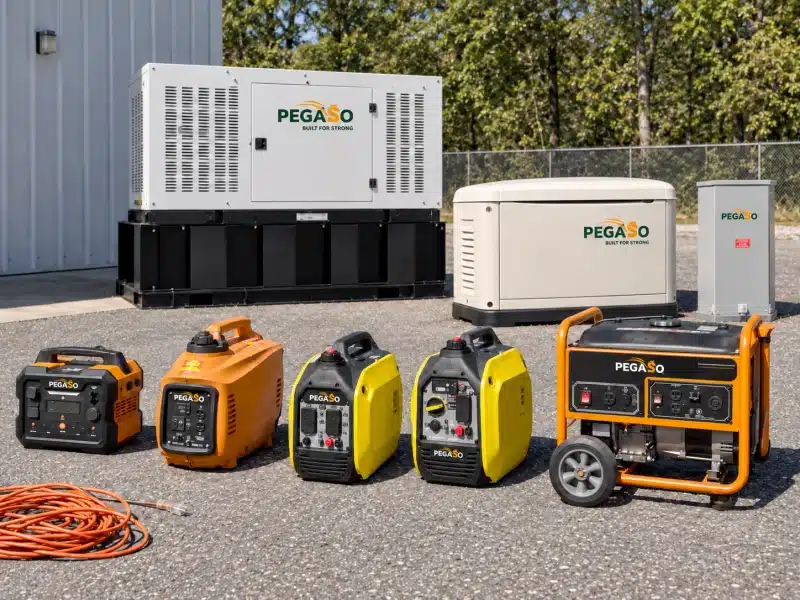
Home Generators
Home generators, also known as whole house generators, are intended to maintain important home systems during an unexpected power outage. They power heating and cooling systems, essential medical equipment and provide reliable back-up power to protect food supplies.
Dedicated Power Delivery: Capable of powering heavy residential loads like central air conditioning, sump pumps and well pumps.
Electronics Protection: Modern residential units provide clean, stable power (low total harmonic distortion) to safeguard sensitive home electronics, computers and appliances.
Fuel Versatility: Most units connect directly to the residential propane line or natural gas supply for long periods of operation without the need for manual fueling.
Portable Generators
Portable generators provide power on demand, anywhere you need it. Whether you're looking for a lightweight inverter generator for outdoor use around your home or a heavy-duty open-frame generator for your worksite, you have options.
High Mobility: Designed with sturdy wheels, folding handles, or compact carry frames for easy transport.
Inverter Options: Portable units with an inverter automatically regulate the engine speed to meet the electrical load, which can save a lot of fuel and noise.
Plug-and-Play Setup: Supports a variety of outlet types such as standard 120V household outlets, 240V twist-lock plugs, and direct 12V/USB charging ports.
Standby Generators
Standby generators are permanently installed outside a property and automatically run. A standby unit is connected directly to your electrical distribution panel via an Automatic Transfer Switch (ATS) and is constantly monitoring your utility power.
Instant Automatic Transfer: Restores power to the entire facility within seconds when the grid fails, even if no one is there.
Self-Diagnostic Testing: Conducts weekly automated self-checks to ensure the battery, fuel system and engine are fully functional before an actual emergency occurs.
Zero Refueling Hassle: It can be directly connected to existing municipal gas lines or dedicated bulk fuel tanks, so there is no need to store and pour fuel manually.
Industrial and Commercial Generators
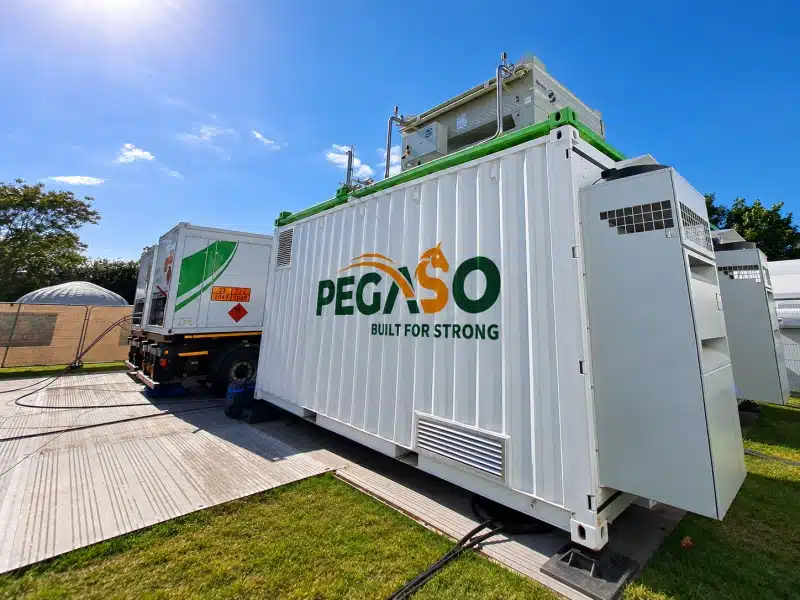
Industrial and commercial generators are designed for high-capacity, heavy-duty operation where power failure can cause serious disruption. These high output systems can be used as prime power on off-grid job sites or as emergency power for mission critical infrastructure.
Heavy Duty Outputs: Provide high wattage capacities (50kW to several Mega watts) for heavy machinery, high voltage equipment and large three phase electrical systems.
Continuous Duty Cycle: Industrial grade cooling systems, heavy duty diesel or gas engines designed for thousands of hours of continuous duty cycle with reinforced components.
Regulatory Compliance: Sound-attenuated, weatherproof enclosures and advanced exhaust filtration systems ensure compliance with strict commercial emissions and noise standards worldwide.
Types of Generators by Fuel and Power Source
The key to picking the right generator is determining how you're going to power it. The type of fuel directly affects your operating cost, maintenance schedule, storage security and run time in the event of an outage. Below is a summary of the main fuel types available in the world markets.
Gasoline Generators
Portable power is often provided by gasoline models. They provide instant power at an affordable entry level and can be compared against the petrol generator range.
Ideal for home DIY projects, camping, tailgating and short-term emergency backup power.
The main benefits are the availability of fuel, the initial purchase price and the lightness of the engines.
Diesel Generators
The heavy duty work horses of the power generation industry are diesel engines. These units are ideal for continuous, high demand loads where equipment failure is not an option, such as applications that are suited to silent diesel generators.
Ideal for industrial generators, commercial facilities, prime power on construction sites and large whole house generator setups.
Key Advantages: Fuel efficiency, extended engine life (up to 20,000+ hours with proper service), and safer fuel storage on-site.
Considerations: More upfront investment.
Natural Gas / Propane Generators
Gaseous fuel units (dual fuel and tri fuel) offer flexibility and longer operating times without fuel degradation problems.
For permanent standby generators directly tied to utility lines or rural properties that use liquid propane (LP) storage tanks.
Main benefits: reduced emissions, lower noise levels, and extended runtime when using natural gas from a municipal supply. Propane will not go stale.
Considerations: Lower energy density than diesel, which means higher fuel flow rates to achieve maximum wattage capacity.
Solar and Clean Energy Generators
Solar generators and lithium-based portable power station units are clean, silent, zero emission power units that use battery packs and photovoltaic panels.
Ideal for indoor backup power, outdoor recreation, sensitive electronics and urban areas where noise and emissions are controlled.
The key advantages are that it is silent, has no fuel cost, no carbon emissions, and requires very little maintenance.
Considerations: Recharging requires sun exposure or available grid power, and the initial cost per watt is higher than conventional fuel-powered units.
Hydrogen Generators and New Technologies
Hydrogen fuel cells and hybrid clean-tech power units are the laste technology.But not very common.
Ideal for Zero Emission Commercial Installations, Green Construction Projects, and Mission Critical Telecom Backup.
Main Benefits: No harmful exhaust (only water vapor), high energy conversion efficiency.
Considerations: State-of-the-art technology that has not been widely adopted.
Common Applications and Use Cases for Generators
Each power outage presents unique problems, and selecting the right machine from various types of generators is all about the operating environment. The power solution must be matched to the load requirements, desired run time and emergency-response conditions.
| Application Category | Primary Use Case | Recommended Generator Type | Typical Wattage Capacity |
|---|---|---|---|
| Residential Backup | Blackouts, storms, grid failure | Standby/inverter/portable | 3 kW–22 kW |
| Commercial & Industrial | Continuous runtime, peak shaving | Heavy-duty diesel/natural gas | 50 kW–2,000 kW+ |
| Mobile & Job Sites | Construction tools, off-grid work | Portable inverter/power station | 1 kW–10 kW |
Residential Backup Power and Emergency Prep
Reliable home backup power is crucial in the face of severe weather and aging electrical infrastructure. An immediate power changeover might be necessary to ensure that your home, property and daily life are not disrupted.
Portable generators, such as a properly sized 5000W gasoline generator, can power essential circuits such as refrigerators, lighting circuits, Wi-Fi routers, and sump pumps.
Whole House Power: Automatic whole house generator or permanent standby generators are designed to work directly with your automatic transfer switch (ATS) and seamlessly power central HVAC, electric water heaters, and heavy kitchen appliances during extended outages.
Silent and Clean Energy: Battery-powered portable power stations and quiet inverter units provide stable, pure sine wave power to sensitive home office equipment, computer and home electronics.
Commercial and Industrial Operations
For business owners, downtime can result in lost revenue and jeopardized safety. Commercial and industrial generators are designed to deliver primary, continuous and emergency standby power that can handle heavy electrical loads.
High-capacity diesel generators and natural gas generators provide instant failover for life-saving equipment and digital servers in critical infrastructure, such as hospitals, data centers, and telecommunications hubs.
Heavy manufacturing plants, processing lines, refrigerated warehouses rely on high wattage capacity units to prevent inventory spoilage, assembly line shutdowns, and to accommodate massive motor starting loads.
Commercial Facilities: Supermarkets, high-rise office complexes and fueling stations have their own stationary units to keep emergency lighting, security networks and point-of-sale systems running.
Outdoor Recreation, Camping, and Job Sites
When working off-grid, you require rugged, transportable power that can handle the harsh conditions and provide consistent power output.
Construction and Contracting: Remote job sites need heavy-duty steel roll cage portable generators to power circular saws, air compressors, rotary hammers, and high-output site lighting. If you have a bigger combined tool load, you can consider a heavy-duty 10kW gasoline generator.
RV Living and Camping: Lightweight inverter generators and solar generators are extremely quiet and low emission, complying with strict campsite noise ordinances and providing power for onboard air conditioners and kitchen appliances.
Field Events and Media Production: Mobile broadcast stations and outdoor events use clean power generation to power audiovisual equipment, lighting rigs and transmission equipment without voltage fluctuations.
Main Points of Purchasing a Generator from China
By dealing directly with the manufacturing generator plants in China, you can find competitive factory prices, custom engineering and full range of generator types. From small units for retail sales to large industrial units for infrastructure projects, it is essential to meet the market's specific requirements for optimal performance and brand reputation.
Power Output and Generator Quality
In the real world, reliability of power generation equipment boils down to two basic factors: proven power delivery and component-level build quality.
Accurate Wattage Capacity: Always determine both running watts (continuous load) and starting watts (surge capacity). To power sensitive electronics, industrial motors and home backup power systems, a generator should be able to supply the power without an unacceptable voltage drop.
100% Copper Windings: Steer clear of copper-clad aluminum options. Pure copper alternator coils provide better heat dissipation, high electrical conductivity and significantly longer life of the alternator under continuous load.
Modern commercial setups demand clean power – Stable Voltage Regulation (AVR). The incorporation of the latest Automatic Voltage Regulators (AVR) ensures low Total Harmonic Distortion (THD) to protect sensitive equipment and machinery.
High grade manufacturing includes testing that conforms to standards before shipping. Before accepting units for deployment, ask for evidence of full load tests, temperature rise checks, and vibration analyses.
| Critical Spec | Standard Benchmark | Why It Matters |
|---|---|---|
| Alternator Coil | 100% pure copper | Resists thermal degradation and sustains full wattage capacity |
| THD Level | <5% (clean power) | Protects sensitive microprocessors and telecom electronics |
| Engine Standards | ISO 8528/CE/EPA | Supports compliance with applicable regional emissions and safety requirements |
| Load Capacity | 100% prime/110% standby | Helps prevent engine stalls during unexpected peak power draws |
By carefully choosing the appropriate wattage capacity and mechanical strength, you can ensure that your generators provide reliable power in any setting, from construction sites to emergency backup power plants.
Conclusion
The key to selecting the appropriate power solution is to select the most reliable equipment to meet your load requirements. From small portable power stations for remote work to whole house generators for power outages and large industrial diesel generators, choosing the right types of generators means investing in reliable, long-lasting energy security.
As you compare suppliers, look for durability, efficiency, proven output and support of the standards applicable to your destination market.
FAQs
What are the main types of generators available today?
There are several main types of generators to choose from, such as portable generators, standby generators, inverter generators, and industrial generators. They come in different types based on the power source (diesel, gasoline, natural gas, solar), the wattage capacity they are designed for, and their portability.
Which generator fuel type is the most reliable?
Diesel Generators: Most economical in fuel, long run time, heavy duty commercial jobs, and long life.
Gasoline Generators: Great for low cost, short-term portable applications and small tools.
Natural Gas & Propane: Great for permanent residential backup power with unlimited fuel lines and clean burning.
Solar Power Stations: Zero emissions and silent operation for light outdoor and emergency charging.
How do I calculate the right wattage capacity for my needs?
To select the appropriate size:
- Make a list of all the necessary appliances and tools you will be using at the same time.
- Add up their running (rated) watts.
- Add the single largest starting (surge) wattage to allow for motor start-up wattage.
- Choose a generator that has a continuous rating at least 20% greater than the total load for best efficiency and safety.
What is the difference between an inverter generator and a standard portable generator?
An inverter generator electronically regulates the engine to meet your electrical needs and generates pure sine wave power, which is quiet, fuel efficient and good for sensitive electronics such as laptops and medical equipment. A standard portable generator operates at a single speed and provides raw power at a lower initial price, and can be adequate for heavy power tools and simple emergency loads.
Why source generators directly from our manufacturing facility in China?
If you are ordering generators directly from a professional manufacturing facility in China, you can ask for applicable CE, ISO and EPA compliance support, factory-direct pricing, custom engineering, and international and OEM engine options to meet your commercial or residential power requirements.
