

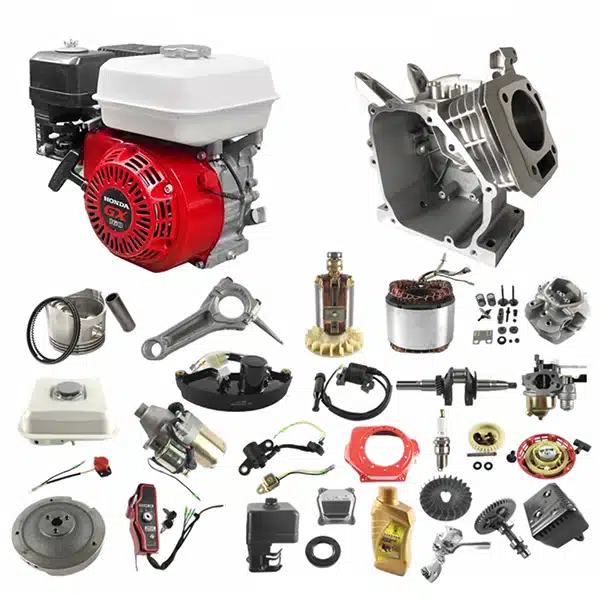
What is an Air Cooled Engine?
An air-cooled engine is an internal combustion engine which is designed to extract heat from the engine during operation by circulating air over it. Unlike the liquid cooled machinery, which includes water jackets, coolants and radiators, air-cooled machinery dissipates heat directly through direct cooling surfaces and strategic air flow.
Basic Definition and Operating Principle
The principle of working of Air-cooled engine depends on the thermodynamic conduction and forced convection:
Conduction is one mode of heat transfer in which the combustion process generates a great deal of heat within the cylinder and cylinder head and the heat is transferred through the metal of the engine block which has high thermal conductivity.
Heat Dissipation by Convection: The metal has a larger external area that cooler ambient air flows over, transferring heat from the hot metal to the air stream to maintain the metal in the optimum operating range.
Key Components of Air Cooling Systems
In the air cooling systems all complex fluid circuits are replaced by simple, heavy duty and lightweight mechanical components:
| Component | Primary Function |
|---|---|
| Cooling Fins | Thin, extended metal surfaces cast into the cylinder barrel and head to multiply total surface area. |
| Cooling Fan / Blower | Integrated into the flywheel to generate continuous, high-volume airflow across the engine block. |
| Air Shrouds & Baffles | Specially engineered metal or composite housings that guide cooling air precisely to the hottest operational zones. |
| Aluminum Alloy Block | High thermal conductivity material that accelerates heat transfer away from the combustion chamber. |

Cooling fans and Air Flow
Surface area expansion and controlled aerodynamic flow are critical to thermal management in an air-cooled system:
Surface Area Multiplication: Up to 800% effective surface area of the cylinder head and barrel is available for the thermal exchange boundary layer to be maximized with the aid of cooling fins.
Directional Air Ducting - Heat pockets, around the exhaust port and spark plug, are eliminated by the turbulence of the cooling fan picked up by the air shrouds and directed straight through the inter-fin channels.
Continuous Thermal Balance: Carefully engineered fin spacing, variable fin thickness provide uniform cooling of the cylinders, assuring mechanical reliability for continuous operating loads.
How do air-cooled engines work?
The underlying thermodynamic principle of an air cooled engine is very simple and extremely reliable – direct heat transfer between the engine block and the atmosphere. The engine does not contain internal jackets with liquid coolant, but instead the excess heat of combustion is conducted directly to ambient heat transfer air flowing over the external surfaces of the engine.
The Heat Dissipation Process
In an air cooled system, the heat removal process is a continuous process and goes through three steps:
Thermal Conduction: This is a transfer directly from the combustion chamber to the walls of the cylinder and the cylinder head.
Surface Expansion: The cooling is designed into a metal surface, which is extended out in an exponential way by the metal cooling fins.
Convective Transfer: The hot fins are cooled by the cold air in the atmosphere, which rushes over them to absorb the heat and carry it away from the body of the engine.
| Stage | Mechanism | Primary Function |
|---|---|---|
| Combustion Chamber | Direct Heat Absorption | Captures thermal load from fuel burn |
| Cooling Fins | Thermal Conduction | Maximizes surface exposure area |
| Air Stream | Forced Convection | Rapidly vents heat into the atmosphere |
Air shrouds and fans fulfill important functions
Natural vehicle motion for airflow cannot be relied upon in stationary applications (portable power generators, utility equipment in the industrial environment). In order to keep the operating temperature stable, forced air cooling elements are incorporated:
Flywheel Cooling Fan: This fan is directly installed onto the flywheel of the engine and spins at the same speed as the engine as it continually pulls in fresh ambient air into the engine.
Engine Shrouds and Cowlings: Well-designed metal or composite cowls housing the cylinder block. They are wind tunnels which enable each cubic foot of intake air to pass directly over the cylinder head and cooling fins, and not be dissipated uselessly.
Optimizing combustion efficiency and thermal management.
Avoiding the loss of useful energy from a combustion engine by cooling it effectively is the key to making it work optimally. Air cooling is very fast to react to change in load and with proper fin spacing and targeted airflow can ensure the cylinder head operates at optimum temperatures as quickly as possible without hot-spotting.
This thermal balance is maintained by these engines and is beneficial for clean fuel atomisation, minimizing carbon build up on valves and preventing pre-ignition, helping to ensure long term reliability under heavy, sustained duty.
Several Advantages of Air-cooled Engines.
When deploying equipment all over the world in demanding job sites, reliability and ease of use are of paramount importance. No liquid circuits, no hassles and an air cooled engine is a high powered reliable power unit, easy to assemble and maintain.
Simple and lightweight design.
The best thing about an air cooled engine is that it's streamlined, and mechanically simple. Since the heat is transferred straight to the air, the engineered cylinder fins get rid of unneeded weight and bulk in the entire machine.
No bulky fluid circuits – No more radiator, water pump, thermostat, coolant hoses and expansion tanks.
Compact footprint enables equipment to be transported, stored and installed in limited work areas.
Instant readiness: Any mechanical things that can go wrong during start up and operation will be reduced due to less moving parts.
| Feature | Air-Cooled Engine | Liquid-Cooled Engine |
|---|---|---|
| System Weight | Ultra-lightweight & compact | Heavier due to liquid & radiator |
| Structural Parts | Minimal (Engine block + Fins + Fan) | Complex (Pump, lines, core, coolant) |
| Setup Time | Fast, plug-and-play | Requires fluid checks and bleeding |
| Cold Weather Risk | Zero risk of frozen coolant | Requires antifreeze monitoring |
Lower Maintenance Requirements
The less parts, the less headaches you will have in the field. By operating an air-cooled engine, you take away the most common causes of on-the-road and on-the-job failures and lower your maintenance routine.
No coolant management: Coolant or antifreeze is no longer a concern, nor are checking antifreeze levels, flushing radiators, or messy antifreeze leaks.
All weather Resilience, no crack forming in your engine block, and no hoses dry-rot or bursting under pressure.
Low operating expenses: Your maintenance includes clean oil, new air filters and clean cooling fins, reducing down time and replacement costs.
Some drawbacks and limitations.
An air cooled engine is a simple and ruggedly reliable, but not for all operating conditions. Unlike conventional engines, these engines do not have a liquid cooling jacket capable of evenly cooling the engine, thus have some mechanical and operational disadvantages for use in extreme conditions.
When operating under heavy load, there is an increased risk of overheating.
The air cooled engine is entirely dependent on the temperature of the air and on a continuous flow of air to cool the cylinder heads and block. Heavy loads that are applied continuously for a long time are a major concern for thermal management.
Extreme heatwaves or direct sunlight will greatly affect cooling efficiency and lead to thermal overload.
Low airflow leads to heat soak very quickly in stationary machines or slow moving equipment where there is no forced cooling fan.
No Thermal Buffer: An air cooled system has no secondary fluid that can absorb a sudden thermal spike as a liquid system does with the use of coolants.
Component Wear: The engine oil deteriorates rapidly due to high cylinder temperatures, resulting in piston scuffing, dropped valve seats and warped heads.
Noise, Vibration
The fundamental difference in the structure of an air-cooled engine vs. a liquid-cooled engine means that an air-cooled engine is going to be louder and is likely to vibrate more than a liquid-cooled engine.
| Source of Noise / Vibration | Mechanical Cause |
|---|---|
| Combustion & Piston Noise | Lack of a water jacket around the cylinder block means there is no liquid barrier to absorb internal engine sounds. |
| Fin Resonance | The thin metal cooling fins can vibrate and "ring" at specific engine speeds, amplifying operating noise. |
| Cooling Fan Whine | Forced-air systems utilize heavy-duty cooling fan impellers that generate high-frequency wind noise. |
| Loose Operating Tolerances | Wider factory clearances—designed to handle uneven thermal expansion—produce more mechanical rattle during cold starts. |
Power Output Constraints
To prevent the air cooled engine from overheating, the manufacturers have to make it within a range of performance:
Lower CR's are used because manufacturer wants to reduce cylinder head temperatures and prevent fuel pre-ignition (knocking).
These engines produce less horsepower per cc of engine than do liquid-cooled engines, and the restricted Horsepower Density is due to the heat dissipation limited by the surface area of the fins.
Cylinder temperatures are uneven, making fine-tuned performance mapping under varying weather conditions more difficult with emissions & tuning limits.
Two types of engines: air-cooled and water-cooled
Understanding the difference between an air cooled engine and water-cooled/liquid-cooled engine is important in selecting an engine. Both perform the same basic function, Thermal Overload Protection, but the methods of doing so are very different.
Core Structural Differences
The basic difference is in the method of heat loss from the combustion chamber.
Direct heat transfer - Air-Cooled Engine. The deep metal fins around the cylinder head increase surface area to allow the ambient air to flow over the metal fins to naturally cool or a forced cooling fan can remove the heat.
Water-Cooled Engine: Indirect heat transfer. Coolant circulates through internal jackets in the engine, absorbs the heat and goes through a radiator, which expels the heat to an external cooling fan and water pump.
| Feature | Air-Cooled Engine | Water-Cooled Engine |
|---|---|---|
| Cooling Medium | Ambient airflow | Liquid coolant / antifreeze blend |
| Key Components | Cooling fins, shrouds, built-in fan | Radiator, water pump, hoses, thermostat |
| Overall Weight | Lightweight and compact | Heavier due to liquid and external hardware |
| System Complexity | Low (few to no moving cooling parts) | High (multiple sealed conduits and sensors) |
| Freeze/Leak Risk | Zero risk (no fluid used) | High risk if hoses crack or coolant freezes |
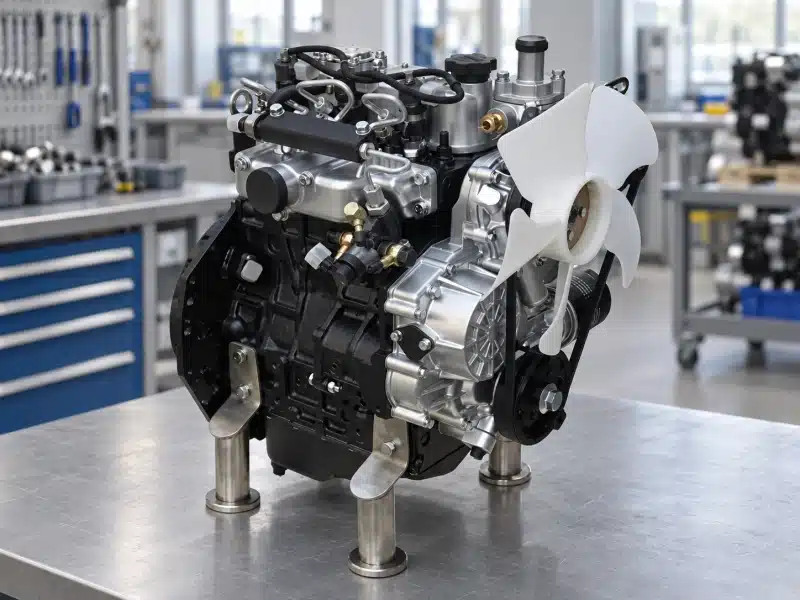
Performance and Efficiency Comparison
Each design will offer their advantages and disadvantages depending on your operating environment and duty cycle:
Warm-Up Time: Air cooled engine has a faster warm-up time, resulting in lower cold start wear.
Water Cooled Engines: Water-cooled engines maintain constant and close internal temperatures, ideal for continuous heavy loads in a high ambient temperature.
Climate Resilience: No need to worry about fluid lines freezing in cold environments or fluid boiling in dry deserts with air cooling.
High usable power is achieved in smaller, highly portable machines by air cooled platforms.
The cost and maintenance cost analysis will be performed.
When it comes to manufacturing and life ownership, cooling techniques affect your bottom line:
Air-cooled engines have fewer parts and simpler castings, which keep up-front acquisition costs down.
Simple and quick servicing: No radiators to flush, no coolant levels to check and no hoses or thermostats to replace.
Downtime and Repairs: Liquid-cooling issues like water pump failure, gasket leaks or a puncture in the radiator lead to sudden engine failures. The air cooled engine removes all these fluid issues points of failure, and ensures reliable uptime in harsh industrial and field conditions.
A wide range of products use
Motorcycles and Power Equipment
The air-cooled engine can be found on dozens of common commercial and industrial tools, as it cuts away extra weight and does not need the use of a radiator. Not having coolant leaks and not having water pump failures is a big plus when it comes to freezing weather seasons or hot weather in the summer with little moisture in the air.
Here, the air-cooled engine proves to be handy every day:
PEGASO, a professional manufacturer of generators in China, produces portable generators for back-up home power, construction sites and remote utility operation where ease of maintenance, quick start is crucial.
The natural air flow while moving the engine block is the reason the block is light, nimble and cheap to service on classic cruisers, commuter bikes and dirt bikes.
Forced-air cooling is provided by a flywheel, ensuring dependable cutting power all day for walk-behind lawn mowers, zero-turn tractors and string trimmers.
Heavy Duty Single Cylinder Air-cooled Engines are installed in Light Construction Gear equipment, such as plate compactors, power trowels and concrete mixers, and are designed to withstand constant vibrations on the jobsite without coolant line failure.
Agricultural Pumps: These are high pressure water pumps as well as chemical sprayers that are used around the clock in fields that are far removed from the area where servicing of the complex liquid-cooling systems is not feasible.
| Equipment Type | Engine Configuration | Primary Reason for Air Cooling |
|---|---|---|
| Portable Generators | Single-cylinder / V-Twin 4-Stroke | Compact footprint, easy jobsite portability |
| Commuter Motorcycles | 100cc – 250cc Single Cylinder | Low production cost, simple roadside maintenance |
| Plate Compactors | Horizontal Shaft 4-Stroke | No liquid cooling parts to break from harsh vibration |
| Agricultural Pumps | 5.5 HP – 15 HP Utility Engine | Operates anywhere without access to coolant refills |
Take care of your vehicle with these maintenance and care tips.
The best way to keep an air cooled engine in top shape is by proactive care. These engines do not require water for cooling and satisfy with only air and motor oil, so regular maintenance will help to avoid expensive engine breakdowns and premature engine wear.
Avoiding overheating and engine damage
Failure in an air-cooled system is most often caused by overheating. To avoid damaging the internal components, do the following:
Check Oil Frequently: Oil takes up essential heat from the crankcase and the cylinder block. Always use high-grade lubricants that are heat resistant, keep oil level in check and change oil as recommended.
Never overload equipment - overloaded equipment will heat up. Distribute load of operation, especially under warm ambient temperature.
Check Air/Fuel Mixture: If lean, combustion temperatures increase greatly. Make sure the carburetor or fuel injection system is properly adjusted.
Test Spark Plugs: Spark plugs for condition and gap. If the plug is fouled or overheating, it means that combustion temperatures are not normal.
Cleaning Cooling Fins and Air Intakes Clean off cooling fins and air intakes.
An air cooled engine will quickly overheat if the air flow is blocked. Dirt, dust, grass clippings and oily grime act as an insulating blanket to help retain heat in the cylinder head.
| Component | Maintenance Task | Frequency |
|---|---|---|
| Cooling Fins | Clear debris using compressed air or a soft-bristle brush. Avoid bending the metal fins. | Every 25–50 operating hours |
| Air Intake Screens | Remove loose dirt, leaves, and dust to ensure unrestricted incoming airflow. | Before every operational cycle |
| Cooling Fan & Shroud | Inspect fan blades for damage and clean inside the blower housing. | Monthly or during oil changes |
Do not use high pressure water on a hot engine, if this is done, it can cause the metal casing to crack due to thermal shock. This will ensure the engine parts are always clean, and heat transfer is at its best, extending the lifespan of the engine parts, with regular and gentle cleaning.
Frequently Asked Questions (FAQ)
Which type of engine heats up more quickly air-cooled or liquid-cooled?
Yes, it will reach the higher operating temps first when operating the air cooled engine under low airflow and high load conditions.
Liquid cooling systems depend on the flow of cooling liquid and a radiator to take up and deal with abrupt temperature rises. The air-cooled engine, on the other hand, dissipates heat directly to the air via the cylinder fins. Heat builds up faster if circulation is not continuous and when used directly in the sun and high ambient temperatures.
Here is a description of how the operating conditions influence on thermal buildup:
Airflow Dependency: This means that an air cooling system has to constantly move air, either by the machine's moving or by an embedded cooling fan. Longer idling times in enclosed areas will cause higher temperature accumulation.
Thermal buffering: Liquid systems are thermally massed to a very high degree to keep them operating at the correct temperature. Aircooled units respond practically instantaneously to load variations and to throttle changes.
Workload Demands: Continuous operation of peak electrical loads, causes air-cooled power equipment to heat more rapidly than enclosed liquid-cooled commercial power equipment.
Heavy duty blowers and special heat shrouds are engineered, along with precision cast cooling fins, at PEGASO's generator manufacturing and testing facility to eliminate this risk. Modern air-cooled engines can be run, without overheating, for long duty cycles provided air intakes are kept clear and oil maintenance is performed.
How do air cooled engines work and what are their advantages?
An air-cooled engine is an internal combustion engine that removes excess heat by using air flowing directly over the engine’s hot components instead of circulating liquid coolant through a radiator. The basic idea is simple: the engine transfers heat to metal surfaces, and moving air carries that heat away.
