

Generator Fuel Types: Gasoline vs. Diesel vs. Propane vs. Natural Gas
The best generator fuel type depends on how long you need backup power, which fuels are available during an outage, and how much it costs to keep your generator running. Gasoline works well for portable generators, while diesel is often preferred for commercial applications. Propane does not go bad when stored for a long period of time and natural gas supplied through pipelines doesn't require tanks refilling frequently.
If a blackout lasts for a whole day, then what might become more important than the cost of generator itself is the operating cost of a generator. Start from the requirement for power and average outage duration.
| Attribute | Gasoline | Diesel | LPG | Natural Gas (NG) |
|---|---|---|---|---|
| Primary Generator Type | Portable & Inverter | Commercial & Heavy Duty | Portable, Dual Fuel & Home Standby | Whole-House & Commercial Standby |
| Energy Density (BTU per Gallon) | ~120,000 BTU per gallon | ~138,400 BTU per gallon | ~91,500 BTU per gallon | ~1,030 BTU per cubic foot |
| Power Output % | 100% (Baseline) | 100% + (High Torque) | 90%-95% (-5% to -10%) | 80%-90% (-10% to -20%) |
| Storage Shelf Life | 1-3 months (12-24 months stabilized) | 6-12 months (needs polishing) | Indefinite in sealed tanks | None required on site |
| Fuel Supply & Refueling Options | 5 gallons manual jerrycan | Tank delivery of bulk fuel on-site | 20 lb to 500 gallons tanks | Underground utility pipeline |
| Emissions & Noise Level | High CO Emissions; Moderate noise | High Particulates; Loudest | Clean burn; Silent to Moderate | Cleanest Burn; Quietest |
| Cold Weather Performance | Good (Above 0°F or -18°C) | Gels Below 15°F or (-9°C) | Pressure Decrease below 0°F (-18°C) | Excellent (underground pipelines) |
| Best Use Case | Short term outages & construction sites | Constant heavy duty | Long term emergency storage | Automatic whole-house backup |
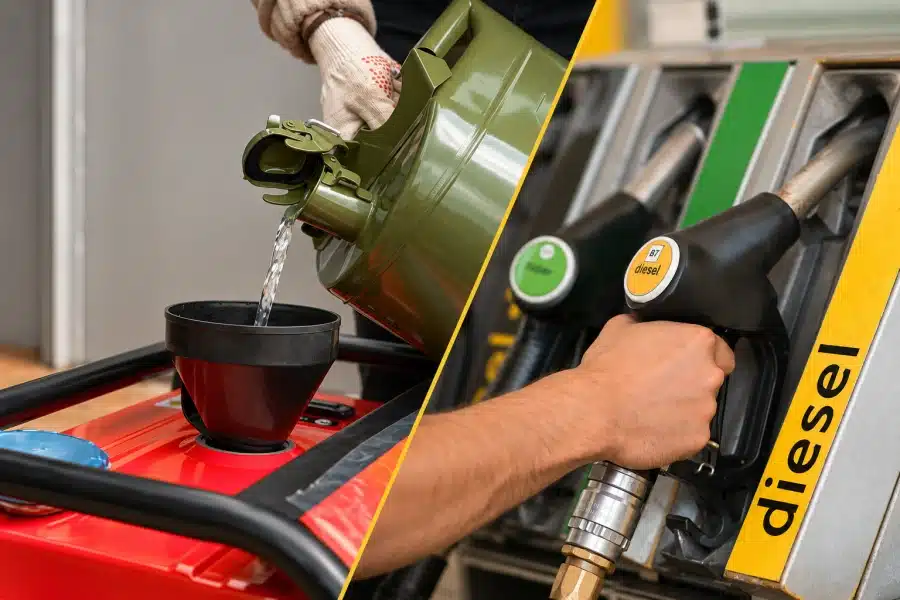
What Fuel Do Generators Use? Four Main Options Explained
Every fuel has its own practical benefit. Gasoline is readily available for portable purposes. Diesel is suitable for extended periods of operation and heavier loads. Propane is good enough to remain in a tank for many years. And natural gas is able to supply through pipelines and without refueling. In the following sections, we will discuss only buying and operating concerns.
Gasoline Generators
Gasoline generators are a popular choice for portable power backups and job site equipment, including some occasional household outages. These units are typically easy and inexpensive to purchase, and most provide the starting watts required to power pumps and other motor loads. However, the problem comes from the fuel aspect: In an extended outage, the user needs to find ways of storing, transporting, and refueling their unit, perhaps during an emergency where gas stations are out of power themselves.
Consult the manual of your particular unit regarding its recommended fuel type. Most smaller gasoline-powered generators require clean 87-octane unleaded gasoline and up to 10 percent ethanol (E10). Gasoline degrades over time when stored, and you should prepare for fuel cycling and storage prior to utilizing your generator during an emergency. Portable generators create toxic carbon monoxide gas: use the generator only outside, at least 20 feet away from doors, windows, and vents CDC generator safety guidelines1.
- Pros: Least expensive initial equipment investment; highest wattage output; most ubiquitous fuel source when gas stations have electricity.
- Cons: Fuel expires relatively quickly (1-3 months); clogs carburetor if left idle; high CO emissions; hazardous to stockpile in large quantity in residential areas.
Diesel Generators
The use of diesel is recommended in such areas as construction, agricultural work, and commercial stand-by where there is a need for continued operation with heavy loads. This is based on its efficiency and also on the strength of the equipment used in commercial enterprises provided that the equipment is well-maintained. The only problem is that the cost of the diesel generator will be higher compared to other forms and that it needs to have fuel storage facilities.
The electrical demand for residences tends to drop drastically during night time. An oversized diesel generator which runs for extended periods at a very low load will end up having something referred to as wet stacking, where unburned fuel and deposits caused by incomplete combustion accumulate. You can find out more information regarding the issue in the article DOE guidance on load-bank testing and wet stacking2.
- Pros: Fuel efficient during high load; less likelihood of fire igniting than gasoline generators; commercial-grade diesel engines last over 20,000 hours.
- Cons: Very expensive; noisy; wet stacking; emissions control laws.
Propane (LPG) Generators
"Liquid petroleum gas," or propane, fills the void between the portable and permanent standby generators. Propane is stored in steel containers as a liquid under pressure, which comes in various sizes, from portable cylinders holding 20 pounds of propane for barbecues to large 250- or 500-gallon underground units installed at homes. Once the tank is opened, the liquid converts to dry gas before being drawn into the engine.
Being vaporized fuel that does not enter the engine in liquid form, propane does not leave any deposits of gum in the fuel system. In addition, the vaporized fuel burns much more cleanly compared to liquid hydrocarbons. The carbon content of propane is less than the carbon content of gasoline and diesel, resulting in reduced emissions of greenhouse gases and soot according to Department of Energy propane emissions data3. Moreover, propane will never spoil if stored in a sealed fuel tank. Therefore, propane is an ideal fuel for remote property owners who may keep their generator idle for up to two years until the next ice storm arrives.
- Pros: Unrestricted storage shelf life; will not gunk up carburetors or fuel injectors; silent; clean odorless exhaust; flexible tank sizes.
- Cons: Generates 5% to 10% fewer watts than gasoline; portable tanks freeze or depressurize at sub-zero temperatures; increased fuel consumption.
Natural Gas Generators
The natural gas (NG) system is considered the ideal choice for automatic whole-home standby generators that can be installed in suburban or urban communities. This system does not require you to store any explosives such as liquids or cylinders in your backyard but will connect your generator to the utility pipeline of your municipality. In case of failure of the electric grid, the generator automatically senses this event and runs on methane gas.
The integration of the pipeline eliminates the worst fear of waiting for one week during a hurricane or blizzard that would lead to fuel shortage as there is no access to roads and gas stations. Natural gas is also considered one of the best fuels for stationary power production where the efficiency of the commercial cogeneration systems can be around 45%. But, you cannot store the natural gas in portable canisters. You have to hire an authorized plumber to set up a new gas line and increase your meter if your pipe is not capable of handling the BTU consumption. You are still dependent on the line but the probability of line failure except during major earthquakes is very low.
- Pros: No regular need for on-site fueling until gas availability; no problem of degradation of fuel or storage space; operating cost savings may be possible based on local rate.
- Cons: Needs utility gas service; high installation cost; 10% to 20% reduced power of the generator compared to gasoline.
Generator Fuel Consumption and Power Output Compared
The mistake that most buyers commit is believing that a 10,000 watt generator will give you 10,000 watts even without regard to what you pour into the tank. The truth is that physical energy density determines both your maximum watts and fuel consumption rate per hour.
Energy Density and Wattage Derating
The amount of heat energy contained within a certain volume is much higher in the case of liquid fuels compared to gaseous fuels. The leader here is diesel with an average of 138,400 BTUs per gallon, then comes gasoline with an average of 120,000 BTUs per gallon. Propane has around 91,500 BTUs per gallon, while natural gas has 1,030 BTUs per cubic foot.
Because propane contains approximately 27% less energy per gallon than gasoline—a physical constraint verified by the DOE propane energy density comparison4—an engine burning propane or natural gas generates less mechanical force per cylinder stroke. In the generator industry, this reduction in electrical output is called wattage derating.
Once a multifuel generator is switched from gasoline to a gaseous fuel, apply this simple derating rule of thumb:
- Gasoline to Propane: A reduction of 5%-10% in running and starting watts is expected.
- Gasoline to Natural Gas: A reduction of 10%-20% in running and starting watts is expected.
In order to illustrate, let us use the example of a medium-sized tri-fuel portable generator with an 8,000 watt capacity using gasoline. Once this very same generator is powered by a propane tank, the maximum output power reduces to about 7,200 watts (10% derate). On switching to the natural gas source via your quick connect stub in your house, the power reduces even more to about 6,500 watts (nearly 19% derate). So if your central air conditioner and your well pump together need 7,000 watts, the generator breaker trips even if the generator can handle it with gasoline.
Hourly Burn Rates and Outage Tank Sizing
For the same amount of engine energy, it often takes more gallons of propane than gasoline. In order to evaluate the costs of operating a generator on gasoline versus natural gas, examine fuel consumption as well as the cost of such operation. Utility natural gas is convenient, but it is not necessarily the most economical choice.
The fuel usage data given in the table below is an estimate based on the average fuel consumption at around 50% of each type of generator’s rated load. The specific values have to be verified with respect to the selected generator model's fuel-consumption characteristics.
| Fuel Type | Sample Running Power | Hourly Fuel Usage at 50% Load | Fuel Needed for 24-Hours Outage | Supply Means |
|---|---|---|---|---|
| Diesel | 8,000 W | 0.45 – 0.55 gal/hr (1.7 – 2.1 L/hr) | 11 – 13 gallons | In-built 15-gal tank or 100-gal sub-base tank |
| Gasoline | 8,000 W | 0.60 – 0.75 gal/hr (2.3 – 2.8 L/hr) | 14.5 – 18 gallons | Four 5-gallon (20 L) portable safety cans |
| Propane (LPG) | 7,200 W (Derated) | 1.00 – 1.20 gal/hr (3.8 – 4.5 L/hr) | 24 – 29 gallons | Around 6-7 20-lb cylinders or 7-9 standard 15-lb cylinder swaps or one 200-lb large house tank |
| Natural Gas | 6,500 W (Derated) | 100 – 130 cubic feet/hr (1.0 – 1.3 therms/hr) | 2,400 – 3,120 cubic feet | Continuous city pipeline |
How Much Does It Cost to Run a Generator for 24 Hours?
Exchange of small cylinders of propane can be more than twice as expensive as delivery of propane into a big tank. The cost differential is illustrated in the following table where the costs are calculated on the basis of the published U.S. fuel prices for the illustrative fuel usage ranges listed above.
| Generator Fuel Type | Fuel Cost Verification and Reference Period | Estimate of Amount of Fuel Used in 24 Hours | 24 Hour Calculation of the Fuel Cost |
|---|---|---|---|
| Regular Gasoline | $4.153/gal – retail price average in the U.S., Nov. 2, 2026 | 14.5-18 gal | $60.22-$74.75 |
| Diesel (highway) | $6.292/gal – retail price average in the U.S., Nov. 2, 2026 | 11-13 gal | $69.21-$81.80 |
| Bulk residential Propane | $2.820/gal – residential average in the U.S., Nov. 2, 2026 (pre-tax) | 24-29 gal | $67.68-$81.78 |
| Propane cylinder exchanges | $21.99 per 15 lb propane exchange – Kroger pricing online on Nov. 9, 20265 | 24-29 gal; 7-9 exchanges, each containing about 3.57 gal | $147.77-$178.56 for the amount of fuel used; $153.93-$197.91 to purchase 7-9 whole exchanges |
| Pipeline Natural Gas | $27.05/Mcf (1,000 ft³) – latest monthly average for residential use in the U.S., August 2026 | 2,400-3,120 ft³ (2.40-3.12 MCF) | $64.92-$84.40 |
Why the price dates differ: ** In the surveys conducted by the U.S. Energy Information Administration (EIA) on retail gasoline and diesel prices6 and residential propane prices7, there are weekly national averages with the last recorded date as of November 2, 2026. The monthly residential natural gas price survey8 by EIA shows the latest recorded date as of August 2026. EIA’s gasoline and diesel data includes taxes, whereas the residential propane price does not include taxes.
It is not safe to presume that natural gas will be the cheapest fuel source: The latest August 2026 national residential average of $27.05/Mcf produces the $64.92–$84.40 range above. For context, EIA's full-year 2025 average9 was $15.34/Mcf, which would produce $36.82–$47.86 with the same consumption. That older annual benchmark is useful for showing how much the chosen price period changes the estimate, but it is not today's tariff. A local utility bill and its variable gas charges are better for predicting the incremental cost of operating a generator.
Cost Calculation: Cost of liquid fuel is gallons used x listed cost per gallon. Cost of natural gas is (cubic feet used/1,000) x listed cost per Mcf. Cost of cylinder exchange fuel-equivalent is gallons used/3.57 × $21.99. Up-front cost rounds up to a whole number of cylinders exchanged. These do not include the cost of purchase/installation/maintenance of the generator, and do not constitute a guarantee of future costs.
Level playing field: This example considers approximately 50% load relative to each generator’s capacity: 4,000 watts for the 8,000-watt gasoline or diesel generator, 3,600 watts for the 7,200-watt propane generator, and 3,250 watts for the 6,500-watt natural gas generator. “Diesel” is also a separate diesel generator rather than an additional fuel mode for the tri-fuel generators. For a valid cost per kWh comparison, use manufacturer’s data regarding fuel consumption at the same delivered wattage.
The figures above show how practical is to operate a portable generator for multiple days. For a three day operation, a gasoline powered machine will require storing and pouring approximately 45-54 gallons of extremely flammable material. Storing such an amount of gasoline is strictly forbidden by most city regulations in a detached garage.
A 20-pound tank containing roughly 4.6 gallons is expected to run out of fuel in about four hours at a rate of 1.1 gallon per hour. Some exchangeable tanks will contain lesser amounts of fuel than that. In contrast, a 250-gallon tank will have roughly 200 gallons of fuel at its 80 percent capacity level and can last up to 167 to 200 hours at the rate of 1.0 to 1.2 gallons per hour. Actual usable runtime also depends on the generator's fuel demand, tank vaporization capacity, and weather.
Generator Fuel Storage Life and Maintenance Requirements
The number one reason emergency generators fail to start during a blackout is stale fuel left sitting in the tank or carburetor from the previous storm season. Liquid fuels are organic compounds that begin breaking down the moment they leave the refinery, whereas gaseous fuels remain chemically stable.
1. Gasoline Oxidation and E10 Phase Separation
If a generator has been sitting unused with gasoline in its tank, simply replacing the old fuel with fresh gasoline may not be enough to get it running properly. Regular pump gasoline can go bad in 30 to 90 days. As the fuel is sitting in an open tank, the lighter components evaporate and the rest oxidize turning into a smelly, viscous varnish clogging the small brass carburetors' jets.
E10 regular gasoline (containing 10% of ethanol) speeds up the process. The problem is that ethanol is hygroscopic – it can absorb moisture straight from the humid air. After about one to three months the water saturated fuel separates into the corrosive mixture called phase separation. Drawing this mixture into the carburetor causes corrosion of the aluminum carburetor bowl and stops the engine from starting. To store the fuel for 12 to 24 months you need to buy the ethanol free fuel, treat it right away with the fuel stabilizer and store it in a hermetic metal container leaving the carburetor dry.
2. Diesel Contamination and Fuel Polishing
Since diesel does not contain volatile light ends, it does not have an evaporation tendency like gasoline. But untreated diesel will last for six to 12 months only before becoming unusable. During this period, diesel forms fine sediment and gum because of interaction with air. These particles block the fuel filters and injectors, whose tolerances are very tight.
Water condensation presents a serious problem to diesel stored in standby tanks. Because of temperature variations, water condenses in the inner walls of the tanks and settles on the bottom of the tanks under diesel. Bacteria and fungi feed where water and diesel interact—the process known to mechanics as "diesel bug" or "microbial growth." It is a dark slime that blocks filters in a matter of minutes. Long-term storage of diesel fuel calls for regular draining of water separators, biocides addition, and biannual fuel polishing (cleaning the tank by circulating fuel through filtration media to remove water and microorganisms).
3. Gaseous Fuel Stability (Propane and Natural Gas)
Engine maintenance due to the use of fuel is completely eradicated when using either propane or natural gas as fuel. This is because propane is always stored in a hermetically sealed, pressurized steel cylinder, which is devoid of any contact with oxygen or moisture from the atmosphere, and thus it cannot be oxidized, fractionated or become contaminated by microorganisms. Propane that was charged in a cylinder ten years ago would be of similar quality when burned today if the valve is free of rust.
How Generator Fuels Perform in Cold Weather
Winter ice storms and polar vortex events test generator fuels to their physical limits. Fuel manufacturers usually disagree on which is the ideal fuel for such conditions since they each fail in a totally unique way when the temperature drops.
Propane Vaporization and Pressure Drops
The liquid propane in the tank needs to convert to vapor form before the generator burns it. This happens at -44°F (-42°C). As the vapor is drawn out of the top of the tank, the boiling liquid picks up heat from the ambient environment through the steel walls of the tank. If the outdoor temperature goes below 0°F (-18°C), the ambient environment is unable to transfer sufficient heat to the liquid and causes the temperature to fall very quickly.
As the temperature falls, the internal pressure of the tank drops significantly. In such conditions, a small 20-pound tank attached to a 7,500-watt generator will frost on its exterior and will not have the pressure for producing vapor to supply the generator – despite being half full. If one intends to operate the generator at very low temperatures, there are two options; one, use large tanks with a volume of 250 gallons to 500 gallons (the tanks have adequate surface area to sustain pressure at -20°F / -29°C); or two, use thermostatically controlled propane tank heater blankets around portable cylinders.
Diesel Waxing and Gelling
Paraffin wax is present in diesel fuel type No. 2 naturally. It is soluble in the liquid fuel at room temperature but when the temperature drops to 32 degrees Fahrenheit, it becomes crystallized and makes the fuel hazy. This temperature is called cloud point, while between 10 and 15 degrees Fahrenheit, it solidifies into a gel that will not pass through the fuel filter or fuel lines.
If you use a diesel generator in cold climate conditions, do not keep summer grade No. 2 diesel fuel in your tank during winter. Anticipate the freezing condition by mixing it with winter No. 1 diesel (kerosene-grade), adding an anti-gel additive before the freezing happens, and installing an engine block heater and battery heater to make the high compression chambers ignite on start-up.
Gasoline Volatility and Natural Gas Pipeline Dependability
Gasoline remains a liquid even under the most severe conditions of an arctic climate, and thus, it will never turn into jelly in the fuel lines. Nevertheless, gasoline that is cold will vaporize very poorly in a freezing carburetor throat, and the engine oil thickens like molasses. To start up the gasoline generator below 10°F (-12°C), one should use synthetic 5W-30 oil, apply the choke judiciously, and keep the starter battery indoors on a trickle charger.
Usually, natural gas is the most reliable source of fuel during severe winter blackouts. Indeed, since the gas distribution pipes of the city infrastructure are buried below ground several feet under the frost line, it is delivered to your generator regulator at the same temperature and pressure no matter what wind chill there is. Apart from fitting the generator engine with a winterization kit (oil heater and breather heater), natural gas needs no winterization at all.
Dual-Fuel vs. Tri-Fuel Generators: Fuel Options and Trade-Offs
The days of having to buy generators that are restricted to a certain type of fuel source are gone now. This is because the new generators are designed to utilize both gasoline and propane in one package, whereas the tri-fuel generators come with a third intake port for low-pressure natural gas.
This innovation has made the multi-fuel generators a great middle way for the homeowner looking for serious protection against storms and other catastrophes without the need to pay $6,000 to $15,000 for a fixed standby generator. In actuality, smart homeowners never put a single gallon of gasoline into their dual-fuel or tri-fuel tanks even during drills or minor power outages. It keeps the carburetor clean from any stale gasoline issues.
Nevertheless, in case of a serious catastrophe, which will empty your propane tanks or interrupt the utility gas pressure, you still have the gasoline tank as your reserve fuel source.
> Tip of Operational Procedure in Changing Fuel Type: In changing fuel type in dual-fuel or tri-fuel generators, one should close the fuel valve for gasoline and allow the generator engine to continue running until the carburetor bowl is emptied. In changing from propane to natural gas in tri-fuel generators, it is important to ensure that the fuel selector dial is switched to the appropriate regulator setting before the start of the engine, while unplugging any heavy appliance due to wattage derating of 10% to 20%.
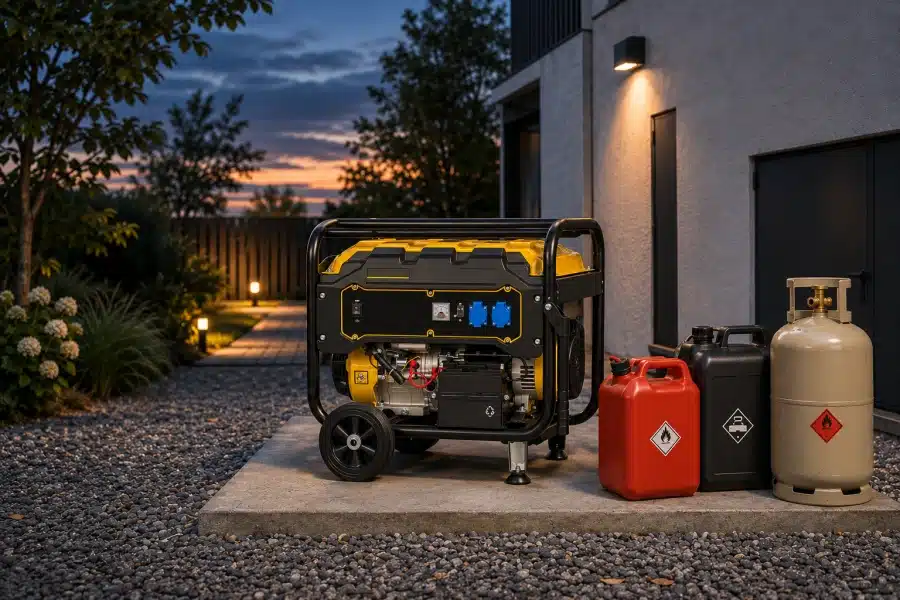
How to Choose the Right Generator Fuel for Your Needs
The best fuel choice depends on how well your building's current infrastructure meets up with the number of blackouts you experience. Use these buyer profiles to find the right fuel for you:
- Best for Economical Portable Backups and Job Sites (Gasoline or Dual-Fuel): If you're looking to power occasional weekend camping trips, contractors' equipment, or short 12-hour storm power outages, then a gasoline inverter or dual-fuel portable generator is right for you. You can keep your initial investment low and still remain highly portable.
- Best for Seldom Used Backup Needs or Rural Homesteads (Propane): If you reside in a rural area without municipal gas lines or use your generator only once every two years, then propane is the choice for you. By purchasing a portable dual-fuel generator and having 100-pound LP cylinders or by purchasing a stationary tri-fuel generator and burying a 500-gallon underground tank, you're guaranteed fuel that will start right away years down the road.
- Best for Automatic Backup Generators in Suburban Areas (Natural Gas or Tri-Fuel): If you already have natural gas in your property used either for heating or cooking, take advantage of it and install a stationary natural gas standby generator for automatic backup needs. Or, purchase a portable tri-fuel generator and ask a plumber to install a natural gas quick connect point near your electrical interlock box.
- Best for Heavy-Duty Commercial, Agricultural, or Prime Power (Diesel): For applications where you will be loading up your engine for 15 kW or more for extended periods of days with loads from 50-80%, using diesel gives you unparalleled torque, fuel efficiency, and engine life.
Before making that decision to make the purchase, check your options against this five-point list for buyers:
- Availability of Local Fuel Supply: Is there an active natural gas meter or an already existing bulk propane tank in your possession?
- Storage Space Options: Do you have a detached shed or cabinet to store liquid cans and LP cylinders away from residential areas?
- Winter Low Temperatures: Do the winters in your area reach temperatures of 0°F (-18°C) or lower to warrant buried LP tanks, natural gas, or winterized diesel?
- Running Watts Needed: After doing your calculations to determine the wattage needed, have you verified the output rating of the generator model based on propane or natural gas?
- Overall Budget: Have you considered spending only on a $600-$1,500 portable generator or do you have a budget to install permanent plumbing and transfer switch?
The same principles are relevant in selecting generators for various markets. Availability of fuel, demand for power output, and local operational environments are all factors that can determine which generators should be made available. This is in addition to modifying other generator specifications like voltage, frequency, and starting system, where necessary. PegasoPower offers OEM/ODM services to address these issues, together with branding and packaging services for private label generator lines.
Key Takeaways: Comparing Generator Fuel Types
When comparing fuel types for generators, it is important to take into consideration more than just the price tag on the generator unit itself, but rather the generator's efficiency over three years in a blizzard. Gasoline and diesel have the most powerful energy density and can provide their maximum wattage rating, yet they require very exact fuel management, which includes regular fuel changing and using stabilizers in order to avoid the buildup in the carburetor and tank sludge. Propane and natural gas can limit your engine's power output by 5% to 20%, but they will provide you with clean combustion, no fuel degradation, and easy startup readiness.
Frequently Asked Questions About Generator Fuels
What type of gas do generators use?
Most portable generators are powered by gasoline, which is commonly abbreviated as “gas.” Generators may also be fueled by gases like LPG or natural gas. The diesel generators are powered by diesel fuel instead of gasoline. It is very important to always refer to the specifications provided by the manufacturer because the generators will only work on their approved fuels.
Which generator fuel type is the most cost-efficient to run?
There is no such thing as an absolutely inexpensive fuel for any particular generator and any particular location. Diesel may be the most economical fuel for long-term operation at high power, whereas natural gas is available at home and could prove to be cheaper per kWh in some markets. However, current average fuel prices across the country do not make the case for any clear-cut economic superiority: compare the cost of each delivered kWh of electricity, fuel consumption of each generator, and your specific gasoline, diesel, propane, or utility rates.
Can you convert a single-fuel generator to run on propane or natural gas?
Yes, there are after-market conversion kits where the demand regulator and gaseous fuel adapter can be added to a regular gasoline carburetor. Installing an after-market conversion kit will nullify your manufacturer’s warranty and require proper tuning of the equipment. For most users, it is easier and safer to buy a ready-to-use dual or tri-fuel generator.
Why can't you use E15 or E85 ethanol blends in a standard gasoline generator?
The 4-stroke air-cooled generators only allow for the use of up to 10% ethanol, that is E10. The E15 blend contains 15% ethanol, while the E85 contains 85% ethanol. These ethanol blends burn very hot, corrode aluminum parts of the carburetor, affect rubber fuel lines, and absorb moisture very quickly.
Do natural gas utilities ever shut off during major power outages?
Not really. The pipeline for natural gas does not depend on electricity from the local power lines to keep the flow going; instead, their compressors in the region use gas turbines for energy. Natural gas utilities continue working in almost every blackout caused by winds, ice, and hurricanes, except in cases of major earthquakes or floods that occur near the meter regulators.
Sources
Centers for Disease Control and Prevention (CDC). [CDC generator safety guidelines](https://www.cdc.gov/carbon-monoxide/factsheets/generator-safety-fact-sheet.html). ↩
U.S. Department of Energy (DOE). [DOE guidance on load-bank testing and wet stacking](https://www.energy.gov/documents/3schenkmansandiapdf). ↩
U.S. Department of Energy, Alternative Fuels Data Center. [Department of Energy propane emissions data](https://afdc.energy.gov/vehicles/propane-emissions). ↩
U.S. Department of Energy, Alternative Fuels Data Center. [DOE propane energy density comparison](https://afdc.energy.gov/vehicles/propane). ↩
Source pending — The original article attributes the $21.99 per 15 lb propane-exchange price to Kroger online pricing on November 9, 2026, but does not include a supporting source link. ↩
U.S. Energy Information Administration (EIA). [retail gasoline and diesel prices](https://www.eia.gov/dnav/pet/pet_pri_gnd_dcus_nus_w.htm). ↩
U.S. Energy Information Administration (EIA). [residential propane prices](https://www.eia.gov/dnav/pet/pet_pri_wfr_dcus_nus_w.htm). ↩
U.S. Energy Information Administration (EIA). [monthly residential natural gas price survey](https://www.eia.gov/dnav/ng/ng_pri_sum_a_EPG0_PRS_DMcf_m.htm). ↩
U.S. Energy Information Administration (EIA). [full-year 2025 average](https://www.eia.gov/dnav/ng/ng_pri_sum_a_EPG0_PRS_dmcf_a.htm). ↩
