

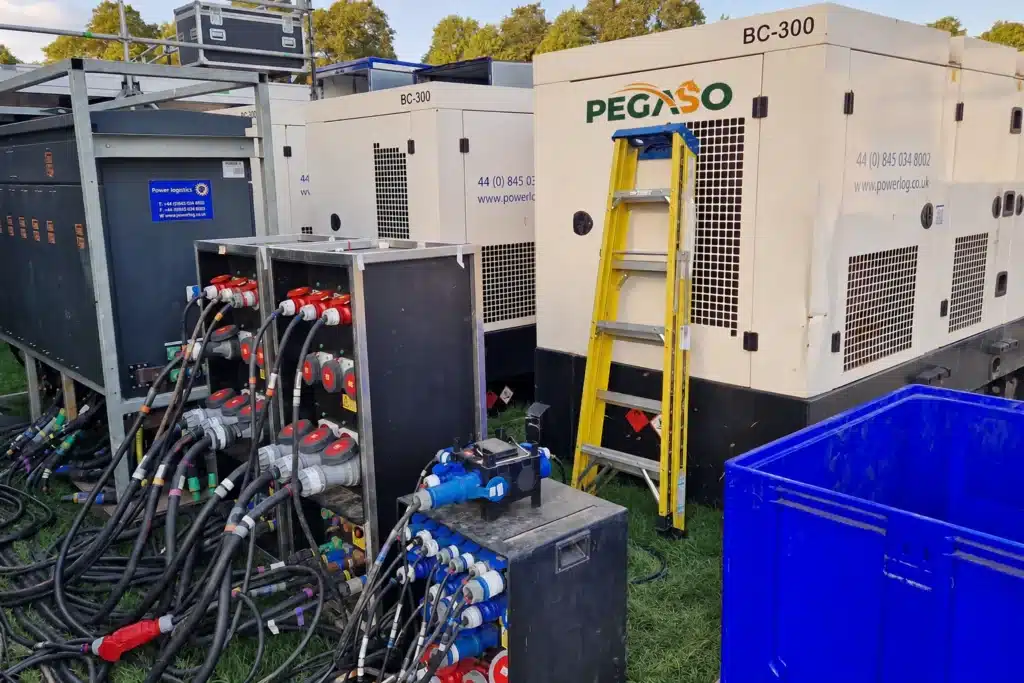
Temporary construction power refers to the temporary electrical systems you set up on a jobsite prior to the connection of the permanent utility grid. A single stand-alone generator is not enough – it takes a full, engineered electrical system (power source, distribution panels, protection devices and cabling) to safely power the site.
This guide provides you with a way to select the most appropriate temporary power source for your jobsite, determine how much power to use at each construction stage, define the distribution equipment you'll need, and compare the actual costs of hiring and buying your power assets.
What exactly is temporary construction power?
Temporary construction power provides power to your jobsite from the time you break ground until the building's permanent electrical service is commissioned. Unlike a permanent installation, the system should evolve as the site evolves, and be able to endure the difficult environment, the intense physical use, and frequent reconfiguration.
What Temporary Power Is Used For on a Jobsite
Temporary power is required on your construction site for a lot more than just small tools. A comprehensive temporary power system should be capable of providing a variety of applications throughout the project life cycle:
- Power tools and fabrication equipment: Saws, welders, air compressors and localized fabrication equipment.
- Temporary lighting: High mast light towers, string lights and stairwell lighting for safety and extended working hours.
- Site trailers and offices: HVAC, computers, servers and break room appliances for project management personnel.
- Pumps and dewatering equipment: Continuous operation of submersible pumps to maintain dry excavations.
- Hoists, lifts, cranes, and elevators: Motors that have high surges for moving persons and materials up and down.
- Heating and dehumidification: Industrial heaters and desiccant dehumidifiers required for concrete curing or drywall finishing.
- Security and communications: Site cameras, access control gates, network hardware.
- Battery and electric-equipment charging: Cordless tool charging stations, electric scissor lifts and electric material handlers.
- Testing and commissioning loads: Powering building chillers, AHUs and life safety systems prior to utility grid energization.
Such loads can vary widely. Your power needs on the foundation pouring day can be very different from your peak power requirements during the interior MEP (Mechanical, Electrical, and Plumbing) installation and commissioning.
Temporary Power Source vs. Temporary Power System
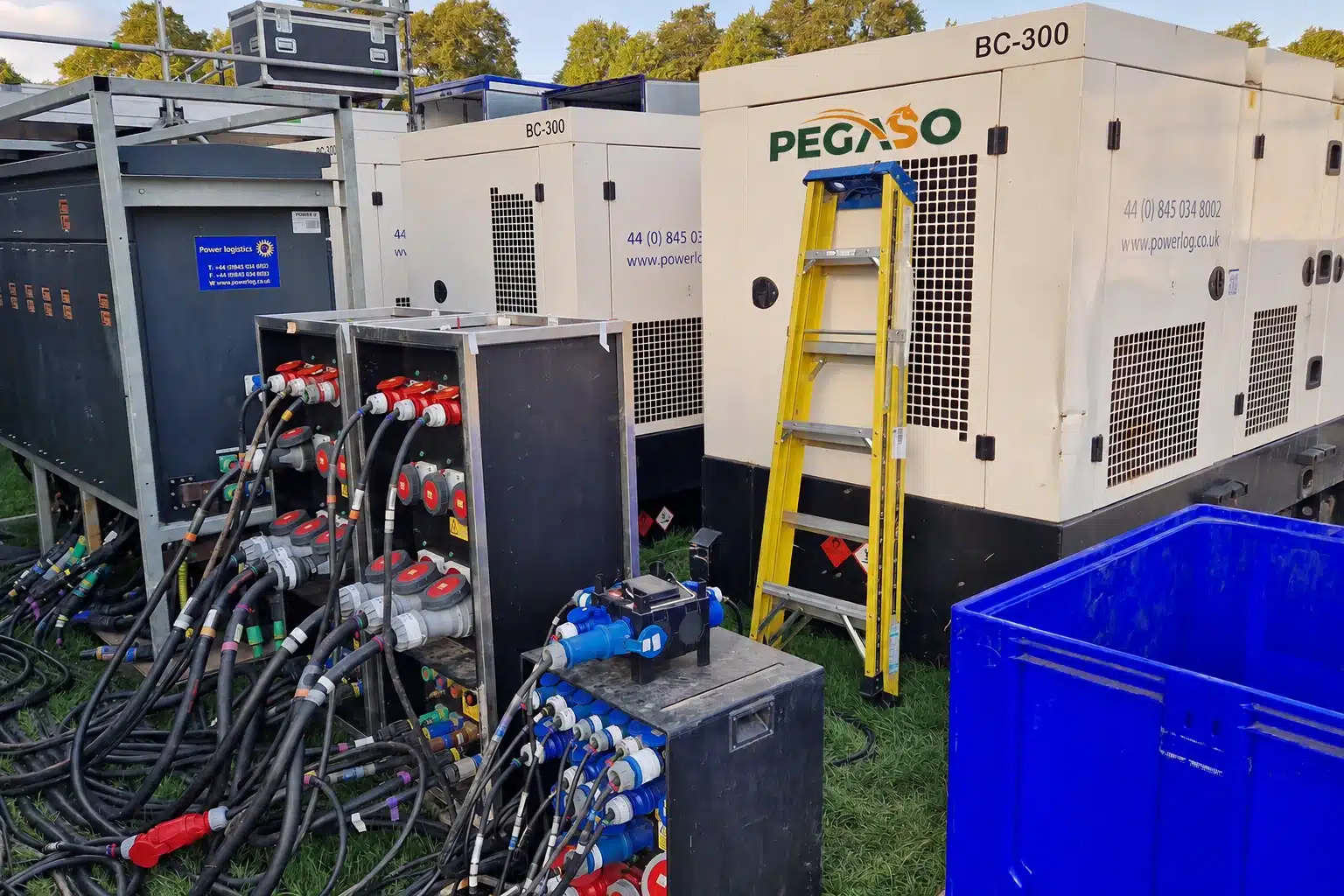
Power source must be separated from power distribution system. Hiring a generator is not the answer to all your site's power requirements. Power needs to be transferred through the entire system chain:
Power source—main protection or transformer—distribution panels—feeder cables or spider boxes—endpoint loads.
- Power source is the source of your electricity. This may be a temporary utility connection, a generator or a battery system.
- Power distribution: This is the control of conditioning and safe routing of power. It features transformers, main breaker panels, switchgear, thick feeder cables, and movable distribution boxes (spider boxes).
- Endpoint load: This is the equipment that uses the power, a crane, a localized string of lights, or a site office air conditioner.
When choosing a temporary power source for a construction site, which one should you choose?
The temporary power source to use depends on your project's location, duration, load profile and the responsiveness of the local utility. But for many high-speed or remote locations, a construction site generator is still the most efficient and adaptable option.
A generator that can be moved from one location to another.
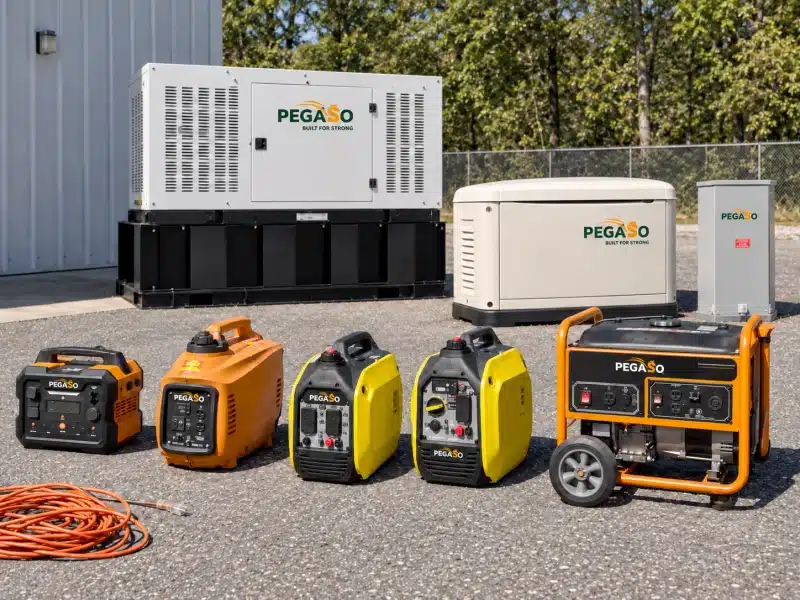
Generators provide instant, convenient power on demand when the power from the utility is not available, or is delayed or insufficient. They can be categorized according to their size and mobility:
Portable Generator
Small gasoline-powered portable generators are appropriate for short duration, localized use or highly dispersed loads. They can be used to power some hand tools and/or temporary lighting until the larger equipment arrives. However, they are not suitable for whole-site power due to their limited kW capacity, limited voltage options, limited number of receptacles, and small fuel tank.
Towable Generator
Towable generators are capable of powering medium-sized construction loads. They can be trailer mounted and are typically sized between 20kW and 100kW, and can be used to provide site offices, dewatering pumps and general tool stations. This mobility is ideal for projects where the power source needs to be taken with the work, such as from one residential or commercial project to another, or from one location to another in a large site.
Mobile/Industrial Generator
For heavy construction loads, you'll need a skid mounted mobile or industrial generator for centralized loads. They are capable of providing hundreds of kW or even megawatt power for multi-zone power distribution panels, tower cranes and commissioning loads. They frequently involve the use of outside bulk fuel tanks, paralleling switchgear to synchronize multiple generators, remote telemetry monitoring, and professionally engineered power distribution networks.
Temporary Power Source Comparison
| Power source | Best for | Deployment dependency | Mobility | Runtime | Noise/emissions | Main limitation |
|---|---|---|---|---|---|---|
| Portable generator | Dispersed, short-term hand tools | Immediate | High | Short (small tank) | High | Limited output and voltage |
| Towable/industrial generator | Site offices, pumps, medium-heavy loads | Immediate | Moderate | Varies (fuel tank dependent) | Moderate to High | Fueling and maintenance required |
How can you estimate the power needs for temporary construction?
To prevent undersizing and oversizing, a reliable temporary construction power calculation is needed. An undersized system can lead to tripped breakers, voltage drop, and equipment damage while an oversized system can result in unnecessary increases in rental costs, wet stacking in diesel engines, and wasted fuel.
Create a load schedule for each of the construction phases.
You will need to tell which equipment is to be used at the same time in your calculation. Distinguish between the connected load (the sum of all equipment nameplates on a site) and the coincident load (actual maximum load that will operate at the same time). Motor start-up power must also be considered: a crane hoist will have a lot more inrush current (kVA) during start-up than inrush kW indicated. Lastly, accommodate voltage loss across long cable lengths and site derating factors, such as for high altitude or extreme temperatures.
| Equipment/load | Quantity | Voltage | Phase | Running kW | kVA/PF | Starting method | Simultaneous use | Hours/day |
|---|---|---|---|---|---|---|---|---|
| Tower Crane | 1 | 480V | 3 | 75 | 150/0.8 | VFD | Yes | 10 |
| Dewatering Pump | 4 | 240V | 1 | 5 | 12/0.8 | Direct on line | Yes | 24 |
| Site Office | 2 | 120/240V | 1 | 15 | 15/1.0 | Resistive | Yes | 24 |
What Equipment Is Needed for Temporary Construction Power?
Enough source capacity is only the first requirement for your temporary power system. 500kW doesn't mean that an electrical contractor who is working on the fourth floor can safely connect a grinder. The equipment required for your jobsite to step down the voltage, protect against faults, and deliver electricity to the end point is a complete chain of specialized, weather-proofed equipment.
Power Source and Main Connection Equipment
Heavy duty connection and protection equipment is required at the source (utility drop or generator). This includes:
- Utility service connection/generator terminals: The point of origin of the power.
- Main disconnect: A switch to turn off all site power easily and quickly in an emergency and that is clearly visible and accessible.
- Main circuit breaker/fuse: Primary overcurrent protection to prevent catastrophic cable or source fires.
- Metering: Equipment that monitors kWh use for cost allocation or utility billing.
- Transfer or changeover equipment: Equipment needed when your site operates with a back-up generator and utility power.
- Emergency stop (E-stop): A control that is used to stop generators immediately if a hazard is detected.
Transformers, Panels, and Switchgear
Most large generators produce high voltage (such as 480V 3-phase) to minimize the size of the cable needed when transmitting electricity over long distances. However, 120V/240V are required for typical site tools.
- Step-down transformer: Transforms source power (480V) into a usable power (120/208V or 120/240V) for site tools and trailers.
- Main distribution panel: Panel that receives power from the source or transformer and distributes power to several large, protected feeder circuits.
- Sub-Distribution Panel: Located on various floors or zones for local distribution.
- Switchgear: Controls several parallel generators in addition to complex routing on massive sites.
- Branch protection: Individual breakers that protect specific circuits.
Note: It might not be necessary to use a transformer with your project. If it is only going to be used for 120/240V power, then the transformer can be forgone if the generator is set up for that specific voltage. But short circuit capacities and protective coordination need to be checked at all times.
Spider Boxes, Feeder Cables, and Connectors
This is equipment that passes power through mud and dust, and is the equipment that your site team physically interacts with.
- Temporary power distribution box (Spider box): Heavy plastic or steel portable power boxes with a number of 120V/240V GFCI-protected receptacles. These are the last plug-in locations for your team.
- Feeder cables: Heavy duty cables with multiple conductors and high insulation levels that deliver high amperage to sub-panels and spider boxes from main panels.
- Branch cords: These are regular extension cords that are connected from a spider box to tools or jobsite lighting.
- Connectors and adapters: Cam type locking connectors for quick and secure connections between heavy feeder cables.
- Cable protection: Cable ramps, covers and elevated routing hooks to keep cables out of mud, water and vehicle traffic to prevent insulation damage and trip hazards.
If you specify cables, determine length and amperage simultaneously so as to avoid an excessive voltage drop at the end of the line.
How do you compare temporary power cost, rental and purchase?
When budgeting temporary jobsite power accurately, total project cost is the comparison that needs to be made. Making comparisons solely on the basis of a generator's weekly rental rate versus its purchase price, or simply assuming that temporary utility power is the lowest cost alternative, is not an accurate representation of the total cost.
Renting vs. Buying a Construction Generator: When is the Right Time?
The rent vs buy decision should be based on your operating pattern in the various projects.
Consider generator rental strongly for a single project, a short term need, or a project with a large difference between phases. With a rental agreement, you transfer maintenance, emergency replacement and off-season storage to the rental company, while keeping your capital budget intact.
Conversely, if your company has a number of projects per year, has a high utilization rate of your fleet, and has the capacity to store and service large equipment, then purchasing a generator may be a better fit. When your towable generators are constantly used for different foundation pours, buying your generators can reduce your long-term operating costs.
Temporary Construction Power FAQs
What is the Cost of Temporary Construction Power?
The price will vary according to the power source, the total kW capacity, project duration, distribution distance and fuel or electricity cost in your location. Small temporary power poles can run a few thousand dollars to install, and a multi-megawatt generator system may range from tens of thousands of dollars per month for equipment rental, fuel delivery and maintenance. Always look at the overall project cost for the entire life of the project.
Can a Generator be Used in Place of a Temporary Power Pole?
Yes. A generator may be the better choice for a short-term, remote or highly mobile project, as it will allow you to avoid the lengthy wait time needed for utility approvals and permits.
How big generator does construction site require?
Sizing a construction site generator requires a detailed load calculation, taking into account simultaneous equipment operating, maximum motor starting events (inrush current), voltage and phase, and site derating factors like altitude and temperature.
