

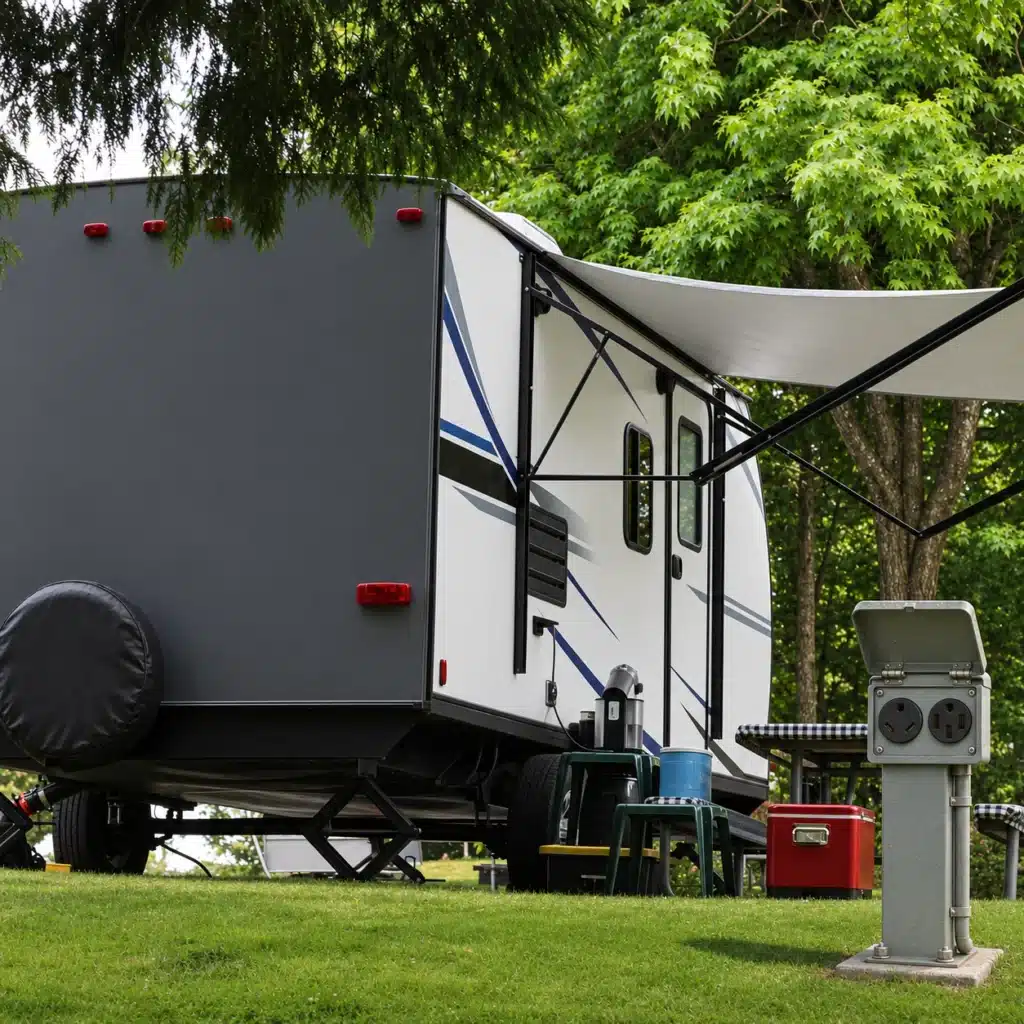
Choosing the right size inverter generator for your RV is not as straightforward as choosing a 30 Amp or 50 Amp system. The 30 or 50 amps refer to the maximum amount of power your RV can take from a shore power source.
The main thing to consider is what you want to run on your inverter generator simultaneously. An inverter generator that can power lights, fridge and charging devices will quickly become underpowered when you try to run an aircon, microwave or coffee maker. Aircons on RVs also have high start-up surges which means you may require a larger inverter generator than you initially thought.
We’ll look at how a 30A and 50A electrical system works, what appliances will really affect your generator size and some factors that can affect your inverter generator like fuel type and paralleling.
Quick Answer: What Size Inverter Generator Does an RV Need?
| RV Type | Recommended Generator Size[^1] |
|---|---|
| Small Travel Trailer | 2,000-3,000W |
| 30-Amp RV | 3,000-4,500W |
| 50-Amp RV (limited loads) | 5,000-7,500W |
| Large Class A RV | 7,000-10,000W+ |
30-Amp vs. 50-Amp RV Electrical Systems
The 30A and 50A ratings have nothing to do with the power output of the inverter generator. They tell you what is the maximum current that can be drawn by the RV from an outside source. This will dictate how much power your inverter generator must supply.
| Factor | 30-Amp RV | 50-Amp RV |
|---|---|---|
| Nominal voltage | 120V | 120/240V |
| Electrical configuration | Single hot leg | Two 120V hot legs |
| Maximum theoretical power[^2] | 3,600W | 12,000W |
A 50amp RV has over 3 times capacity than a 30amp RV. However, the amp rating is only part of the equation. The size of your inverter generator will depend on what devices you want to use at the same time.
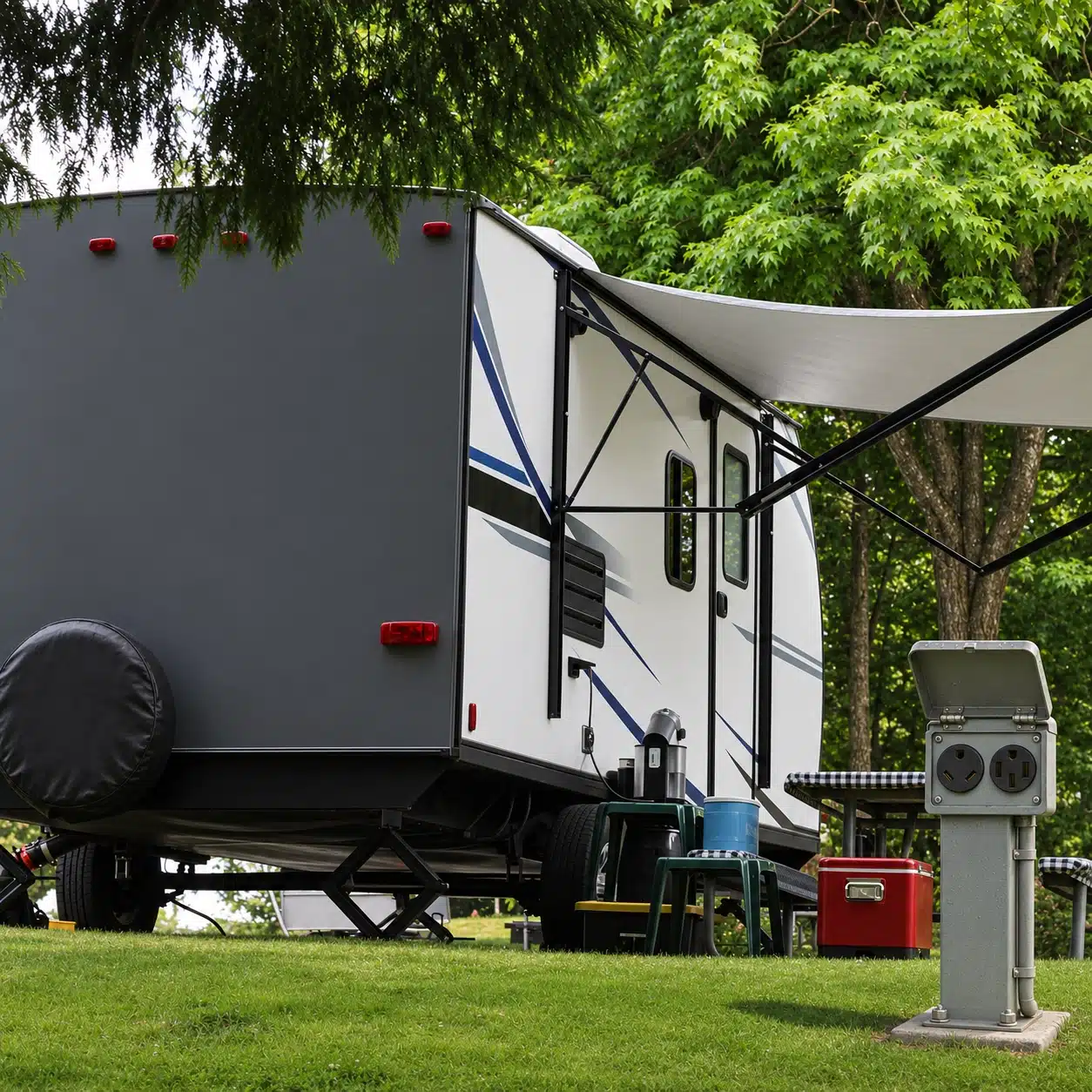
What Size Inverter Generator Do You Need for a 30-Amp or 50-Amp RV?
For a 30A RV, you may be able to do with 3,500-4,000W to power one AC unit and a few essential appliances.
For a 50A RV it will depend on how many AC units and high wattage appliances you have. You won't necessarily need a 12,000W generator. If you're only running one AC unit and a few appliances you could get away with much less.
| 30-Apm RV | 50-Apm RV | |
|---|---|---|
| 3000 Watt | Refrigerator, TV, lights, laptop chargers, and small appliances | Refrigerator, TV, lights, and device charging |
| 3500 Watt | 1 RV air conditioner, refrigerator, TV, and lights | Refrigerator, microwave, TV, lights, and small appliances |
| 4000 Watt | 1 RV air conditioner, refrigerator, microwave (used separately), and lights | 1 RV air conditioner, refrigerator, TV, and lights |
| 5000 Watt | 1 RV air conditioner, refrigerator, microwave, coffee maker, and lights | 1 RV air conditioner, refrigerator, microwave, TV, and lights |
| 6500 Watt | 1 RV air conditioner, microwave, refrigerator, coffee maker, and water heater | 1 RV air conditioner, microwave, refrigerator, coffee maker, TV, and lights |
| 10000 Watt | 1 RV air conditioner and most typical household appliances | 2 RV air conditioners, microwave, refrigerator, coffee maker, and other household appliances |
This chart can give you a clearer progression from basic electrical needs to more demanding RV setups.[^3]
Which RV Appliances Have the Biggest Impact on Inverter Generator Sizing?
The main consideration for most RV owners will be getting an inverter generator for your air conditioning unit. The average 13500 BTU air conditioning unit used in an RV will consume around 1300-1800W. However, on starting up it may draw up to 2500W of power surges.[^4]
Other large electrical items that may be used are electric heating units. Electric water heaters, electric radiators, induction hobs, electric coffee makers, hairdryers and electric ovens generally have a power rating between 1000 - 1800W.
On using these alongside your air conditioner you will quickly reach the maximum power output of your inverter generator even on a 50A RV. Many RV owners will try to manage their loads to avoid having multiple high power heating units operating at the same time.
Should You Use One Large or Two Parallel Generators?
If you're an RV owner with high load devices such as Air Conditioners, Microwaves, Battery Chargers, then an inverter generator with high power output like 4500W or 5500W or even 7000W will make the most sense. The unit will provide plenty of output and there's no need for a second generator to run in parallel. There's no problem splitting the load between two generators.
The downside of having a high power inverter generator is that they become quite heavy. Many inverter generators with 5000W or above can be over 100lbs (45kg). If you regularly change your campsite, then it can be a pain to lift.
More and more RV owners are using 2 smaller inverter generators and running them in parallel. For example, if you use 2 2000W or 2500W generators then you can run them together as required. This will give you almost 4000W or 5000W.[^5] Using just one inverter generator means less fuel being used and less noise when under low load.
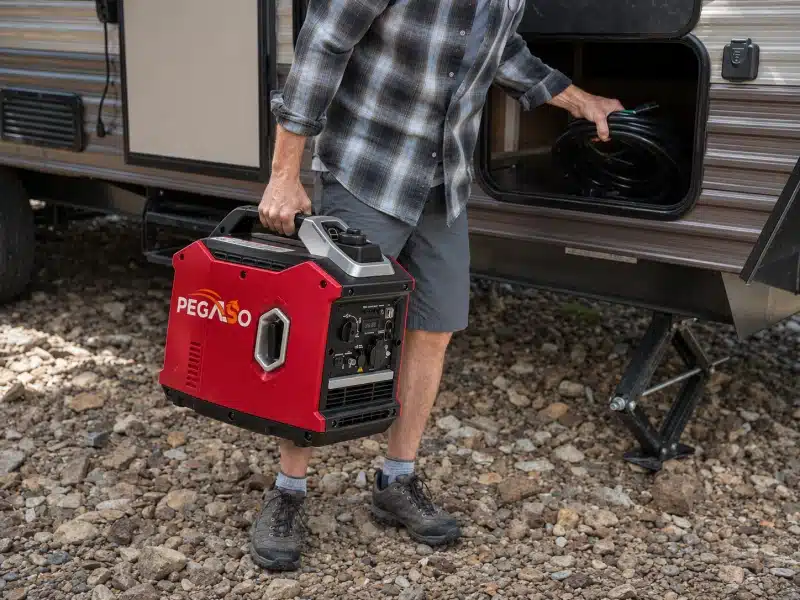
Fuel Types and Power Output: What RV Owners Should Consider
Gas is going to give you the best power output and is the standard fuel type used by most 30A and 50A RV users. As there are plenty of gas stations around, it is ideal for high mileage or longer travel RV users.
Propane inverter generators will produce less power (typically 10-15% less), however they are cleaner burning and the fuel has a longer shelf life. When calculating the right generator size for your use you should take into account the reduced output of the generator.
Diesel inverter generators are more ideal for bigger RV's and will operate at high load levels for longer. However this type of generator tends to be quite expensive to purchase and is heavier and more expensive to maintain. As such they are not ideal for most users of trailer style RV's.
Dual Fuel generators can also be a good option. Take note of the power output differences. If you intend on going on long journeys it is good to have dual fuel options so that you are able to have more flexibility and always have power. An example would be a generator rated at 4500W may only produce 4000W on Propane.[^6]
Conclusion
Overall, here is a summary for recommendation:
- 30A RV: Recommended 3,500W–5,000W
- 50A RV (single air conditioner): Recommended 4,500W–6,500W
- 50A RV (dual air conditioners or high load): Recommended 8,000W–10,000W+
For most RV users, an inverter generator in the 4,000W–5,000W range is often the best balance between power, portability, noise control, and fuel efficiency.
FAQs About RV Inverter Generator Sizing
Can a 3,000-watt generator run a 30-amp RV?
Yes. A 3000 watt inverter generator will work with a 30 amp RV. It will power your essential appliances such as the air conditioner, fridge, and lights. However, if you run many high-powered appliances at once you may overload the generator. Always check how much start-up watts your air conditioner uses.
Can a 5,000-watt generator run a 50-amp RV?
Yes. A 5000 watt inverter generator will work with a 50 amp RV to power essential appliances, but you won’t be able to get the full 12000w of a 50 amp 120/240v RV service. You may need to control your appliances to not overload the generator.
Is an inverter generator better than a conventional generator for an RV?
In general, compared with conventional one, an inverter generator will be better for your RV. They tend to have lower noise levels, provide cleaner power for delicate electronics and will vary their engine speed depending on the electrical requirement. If you are looking for a higher output and don’t mind the noise, then a regular generator may be better for you.
